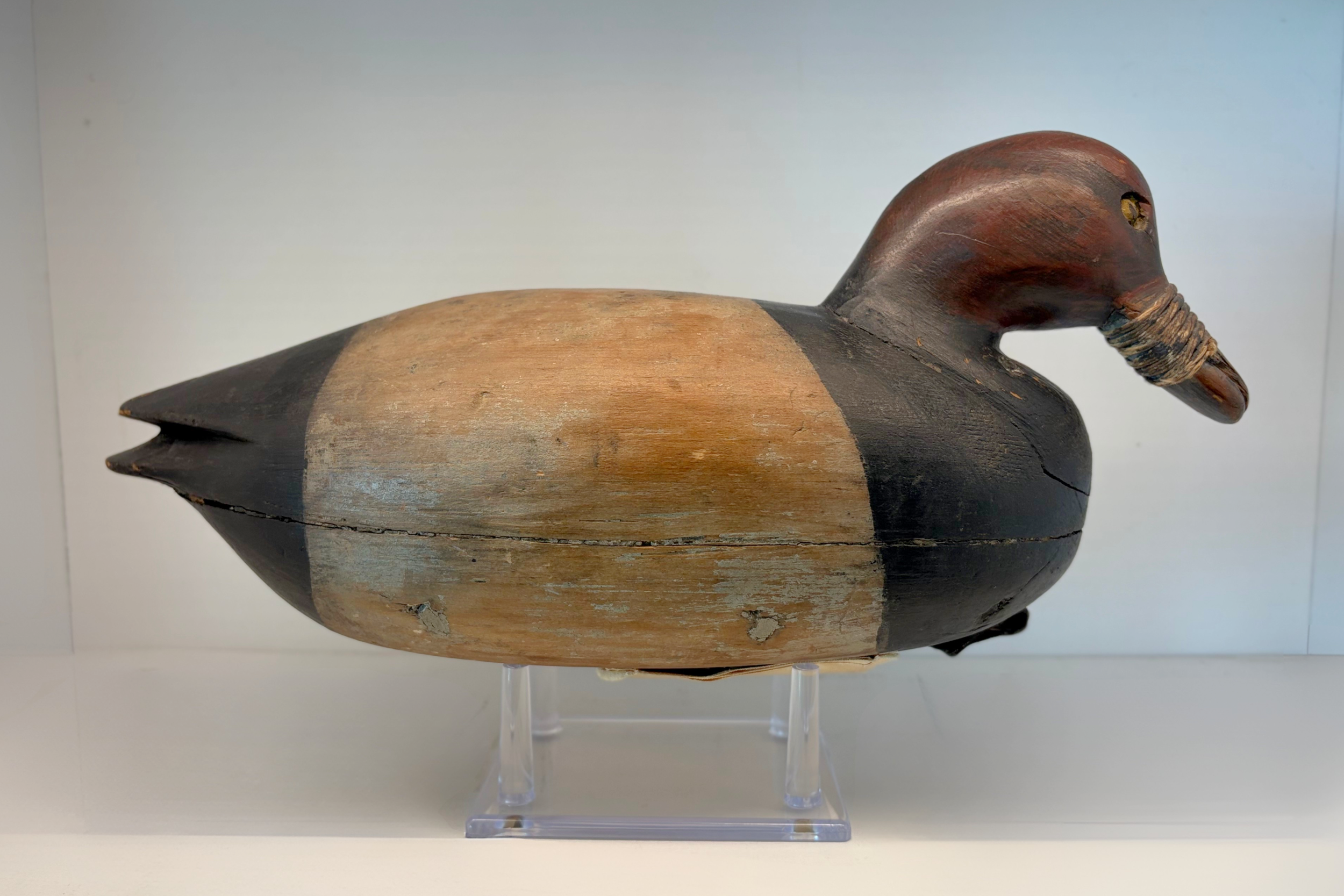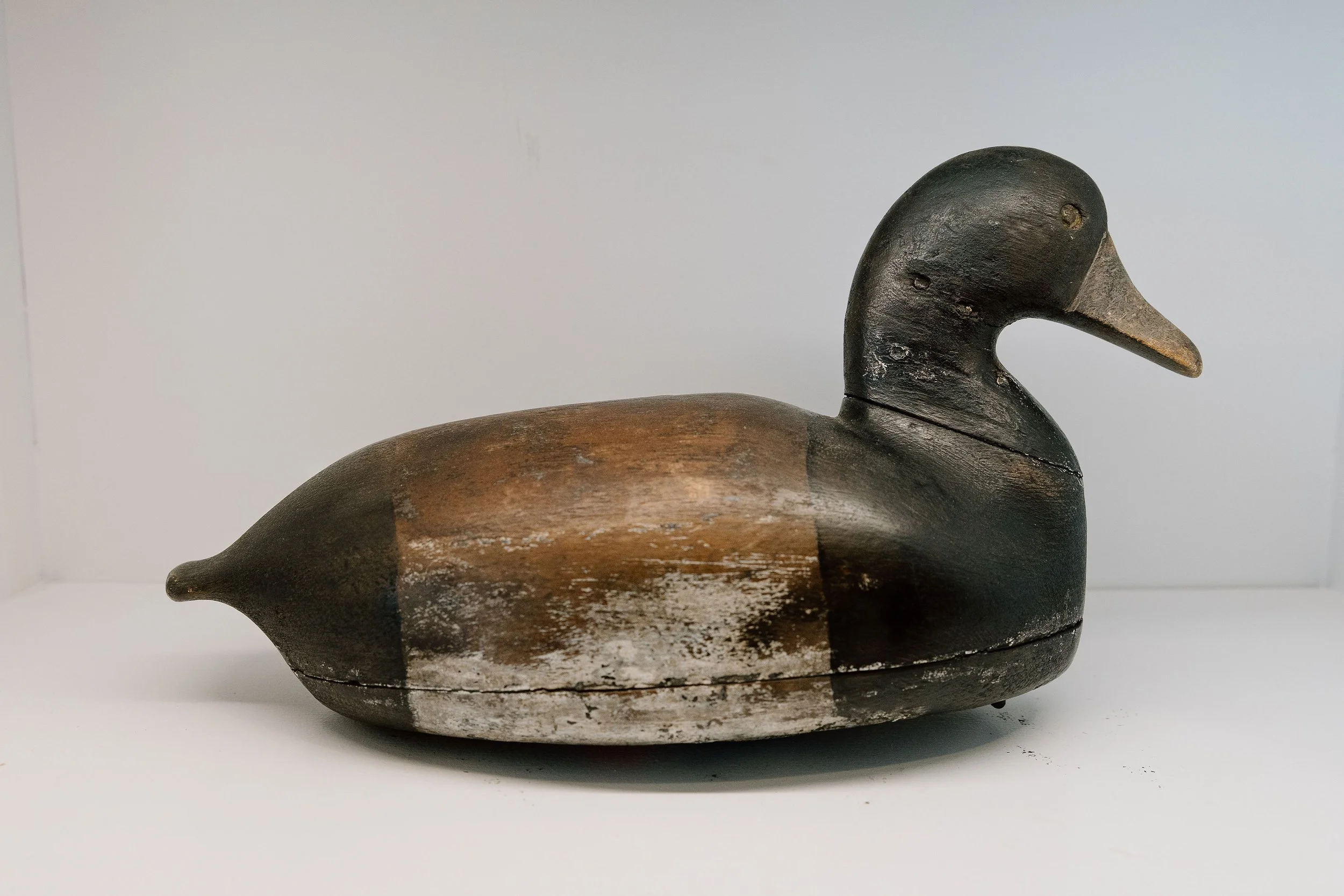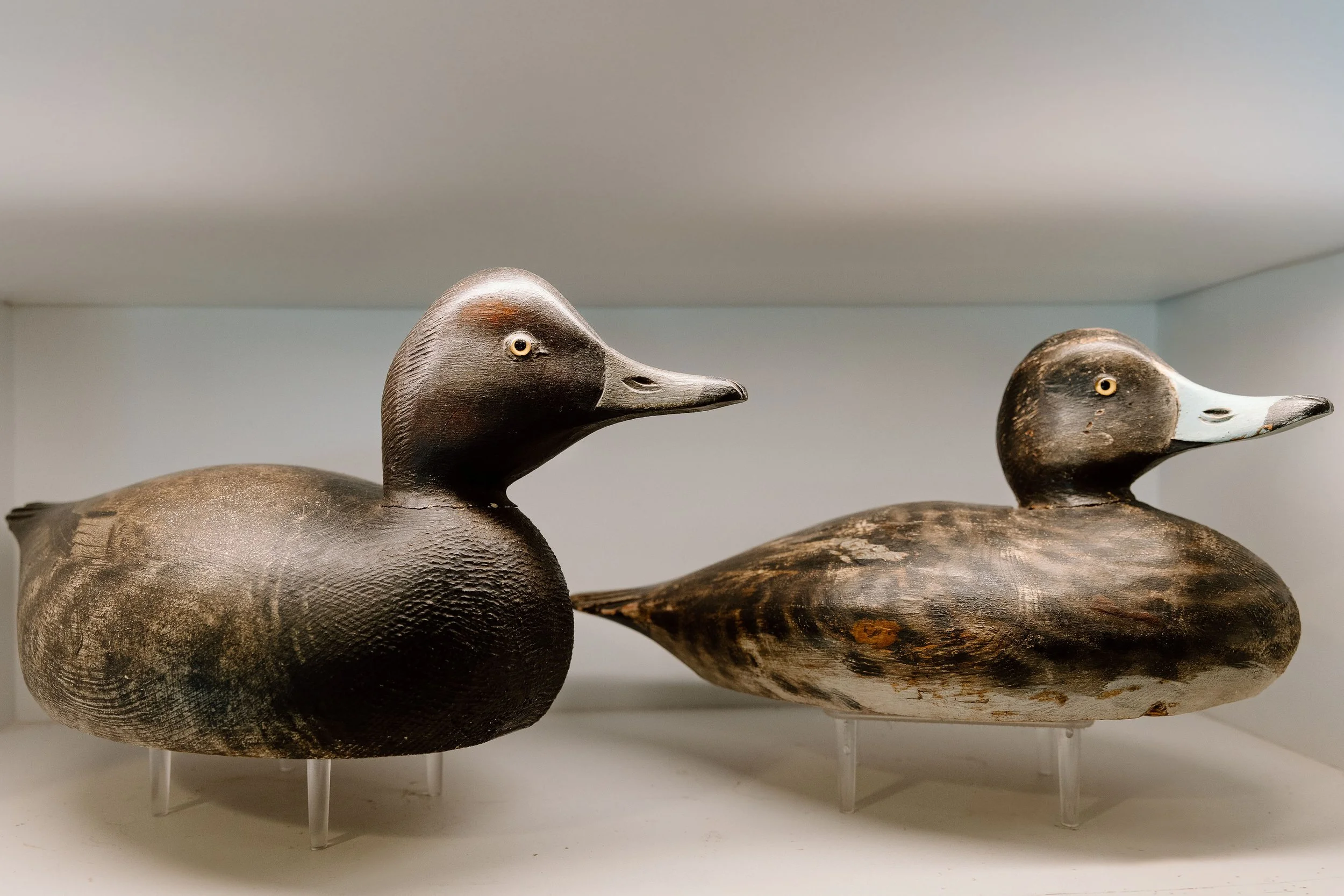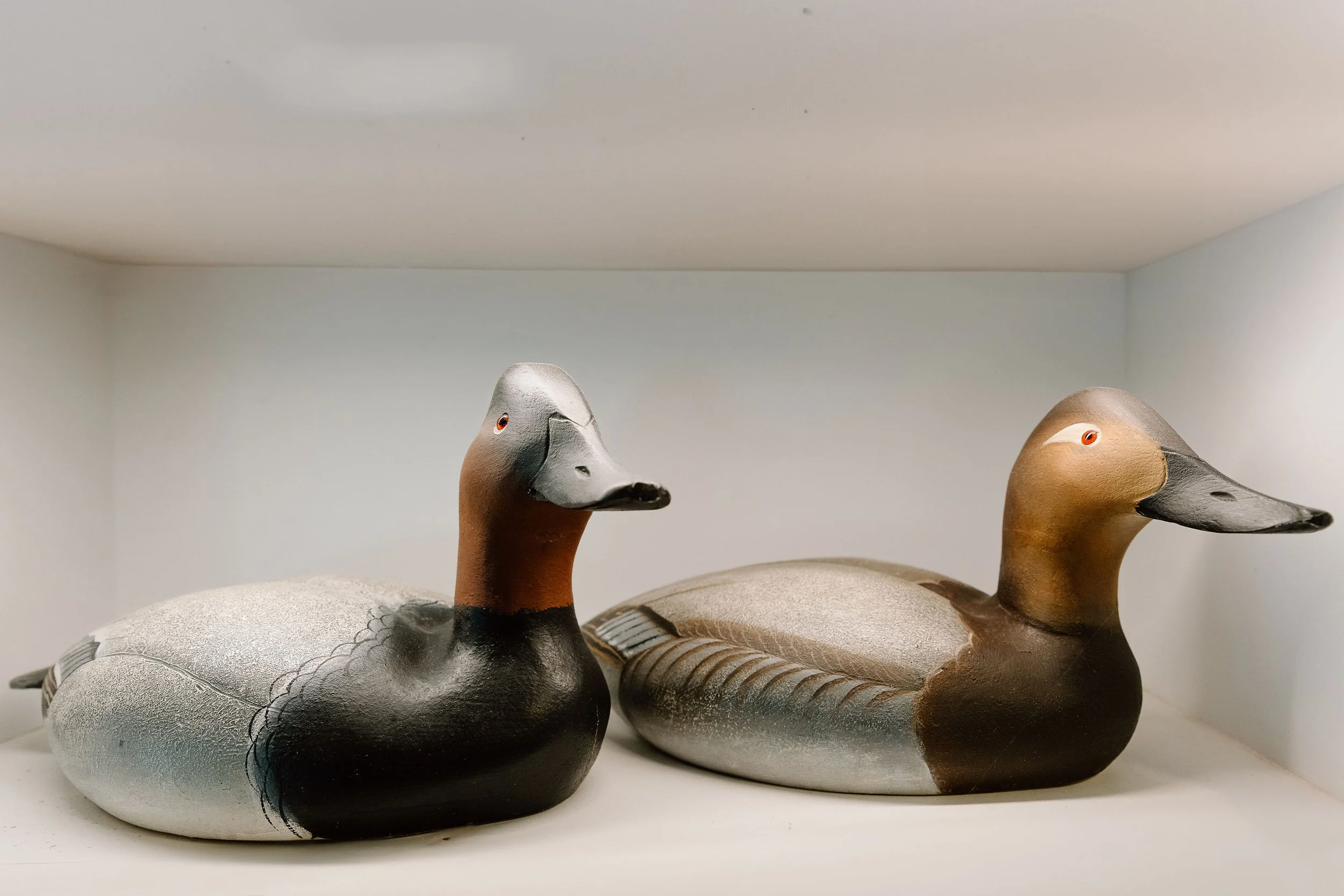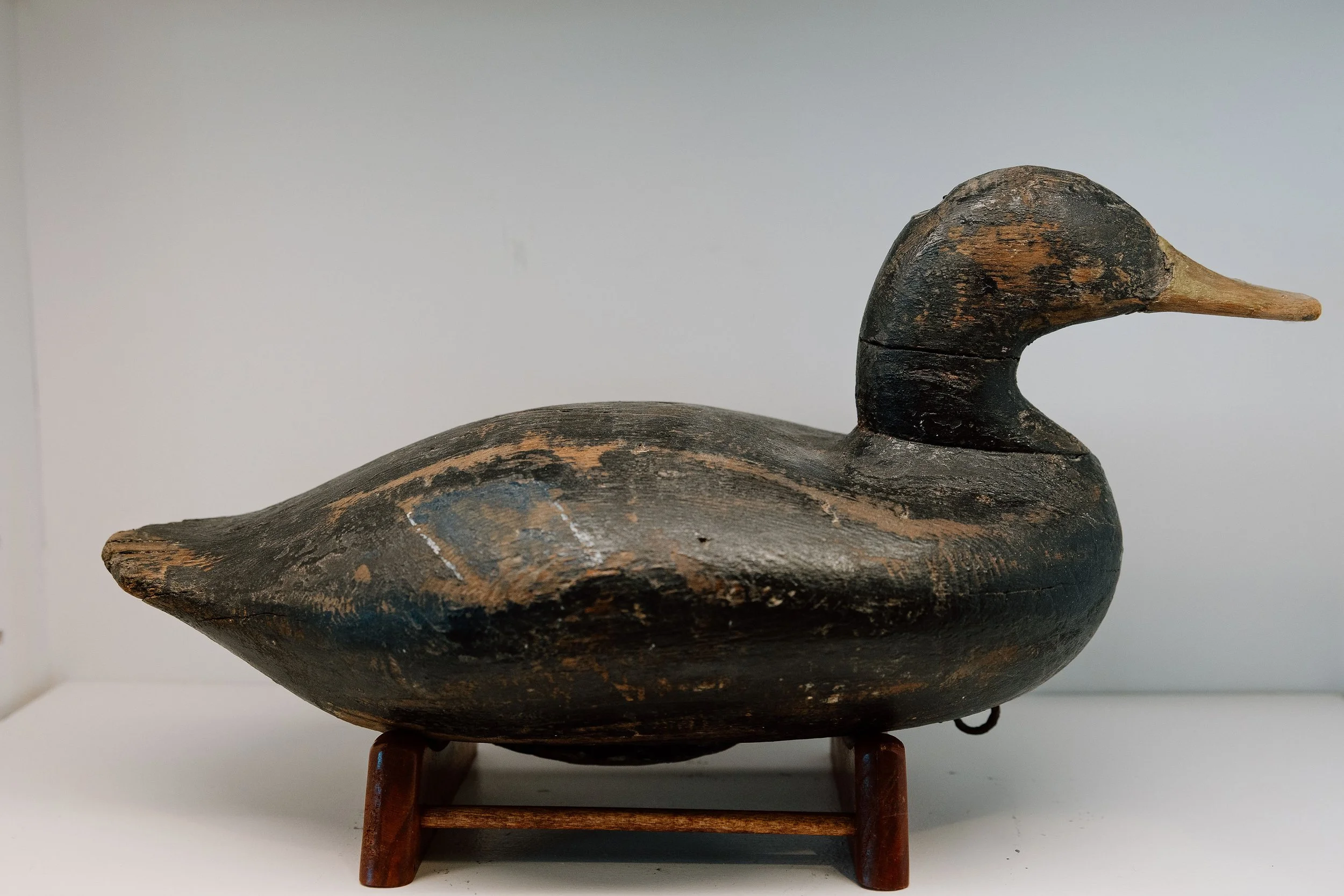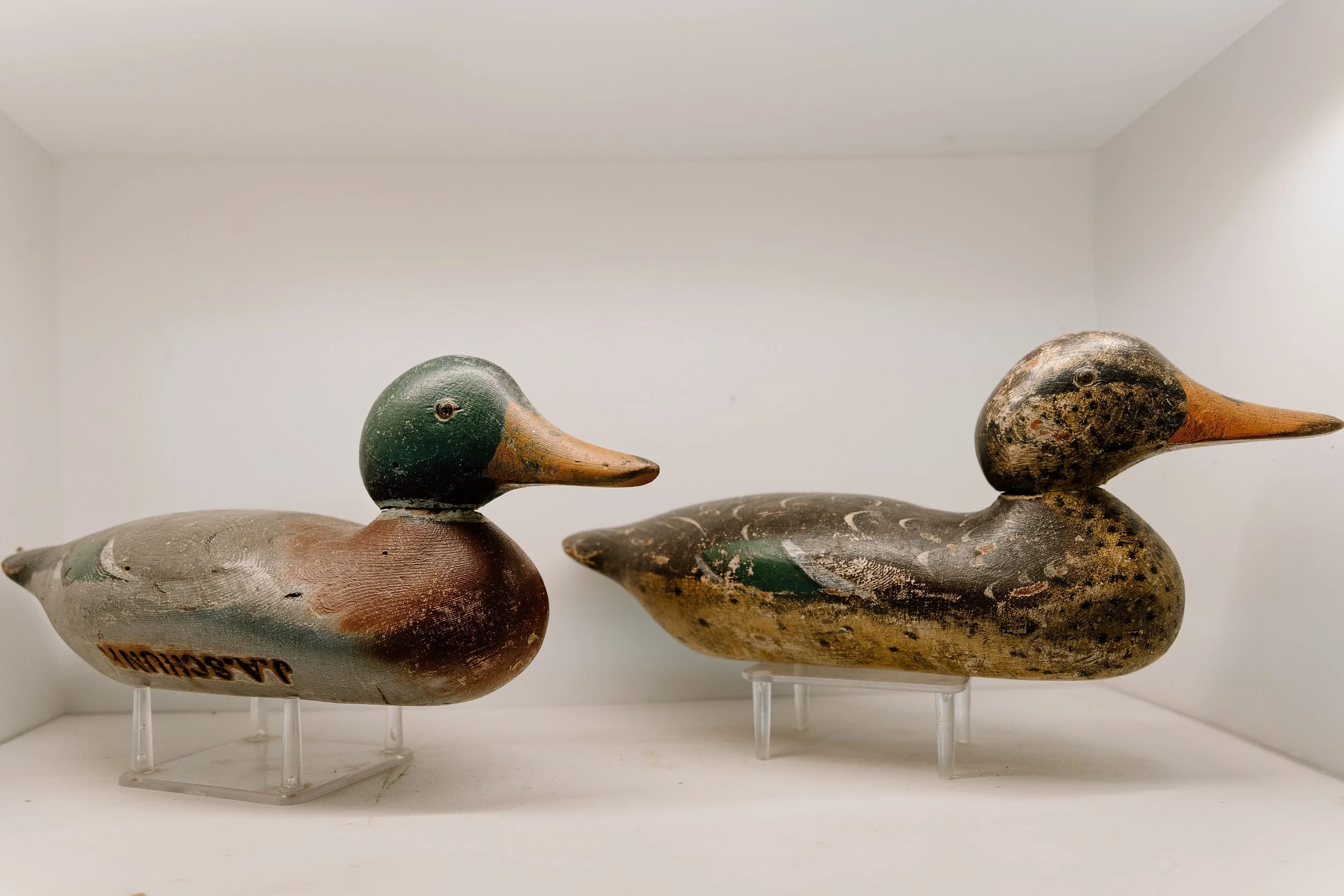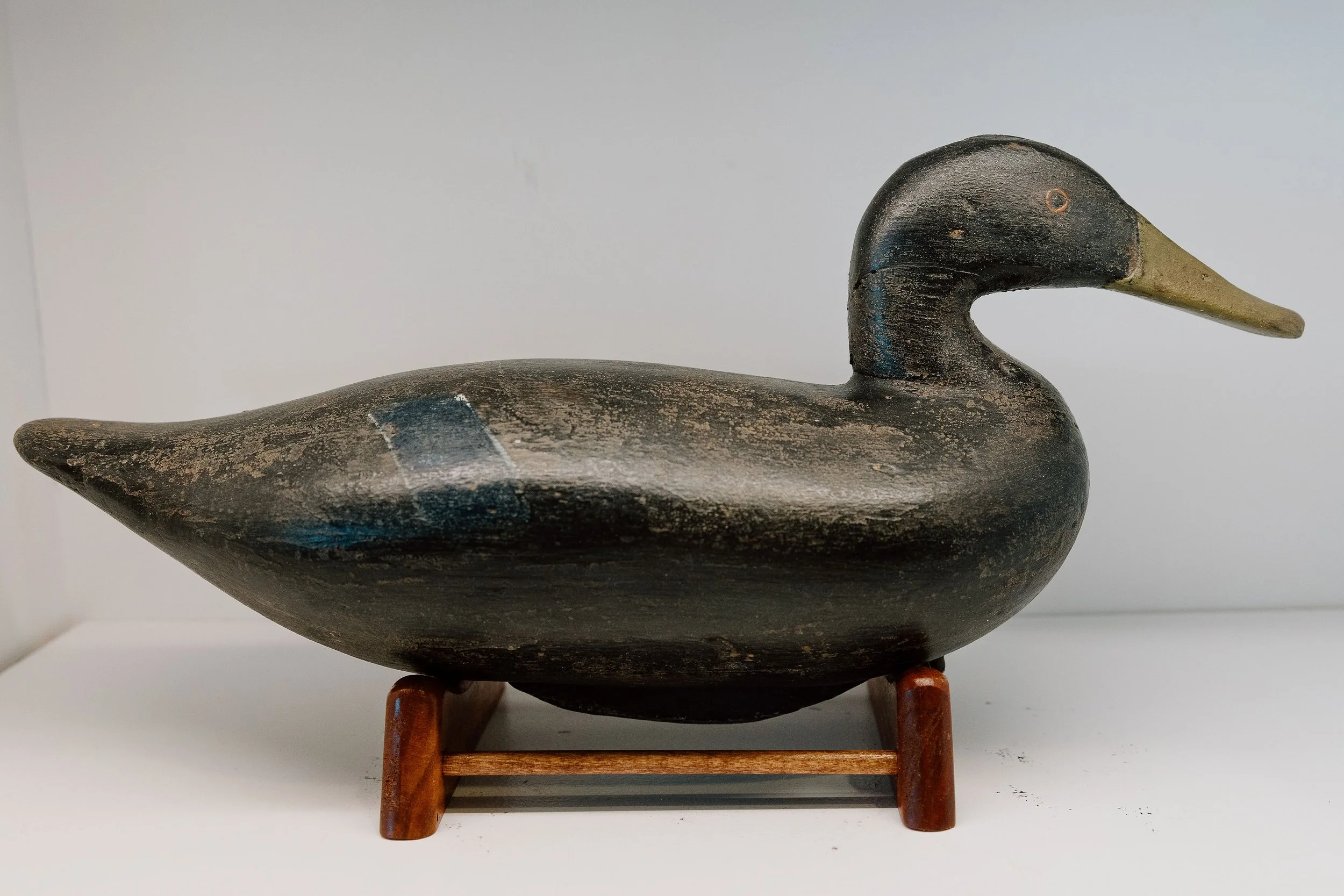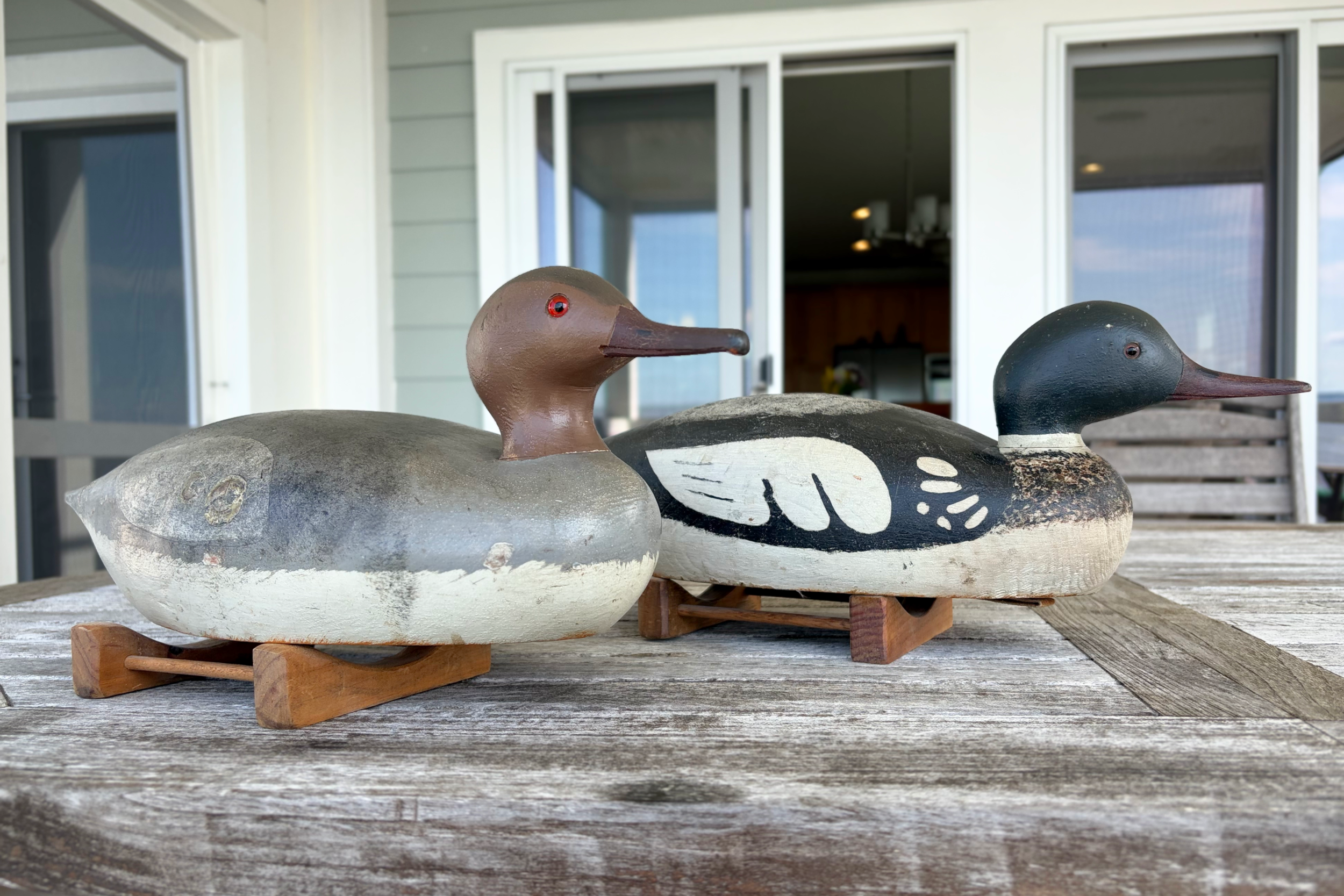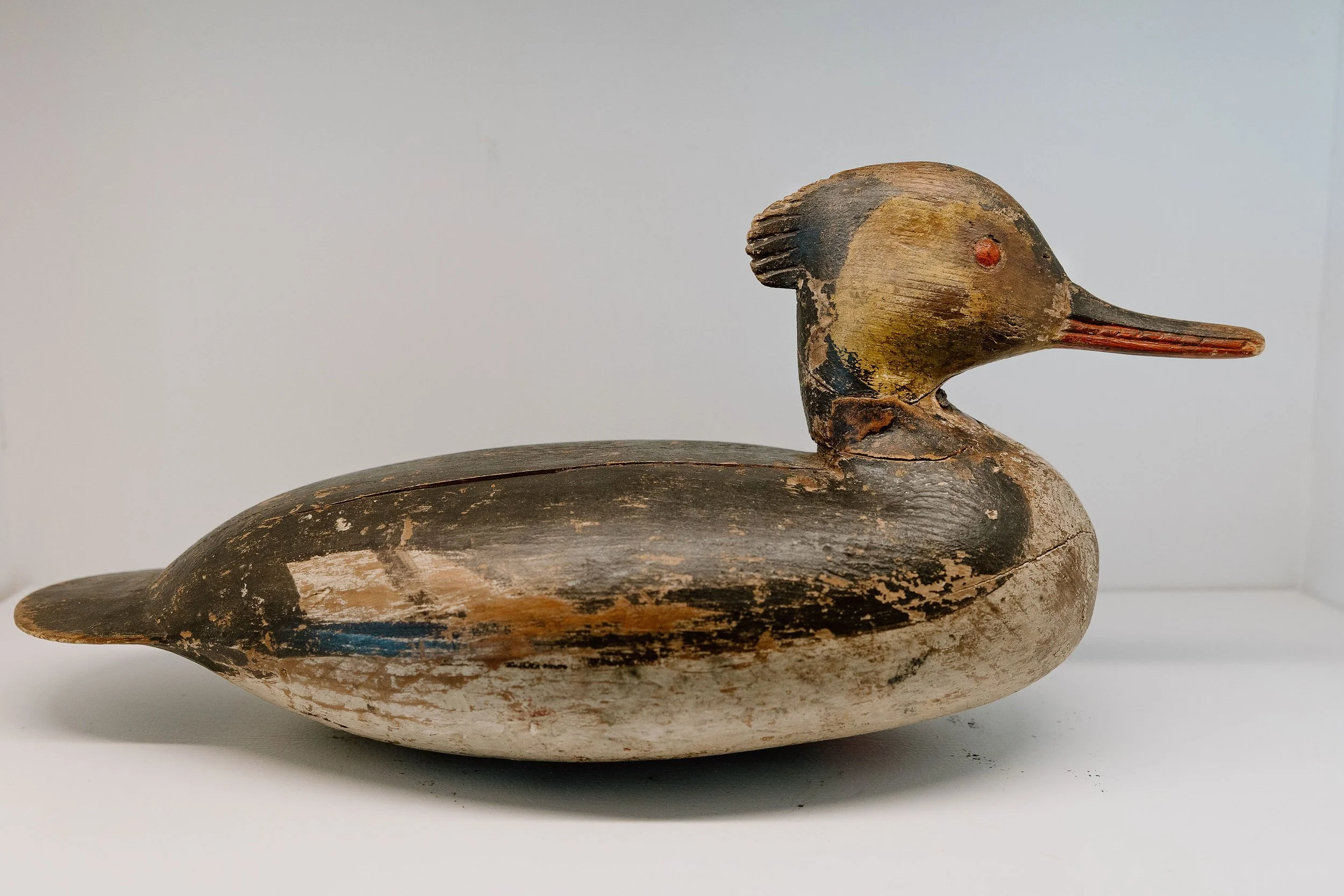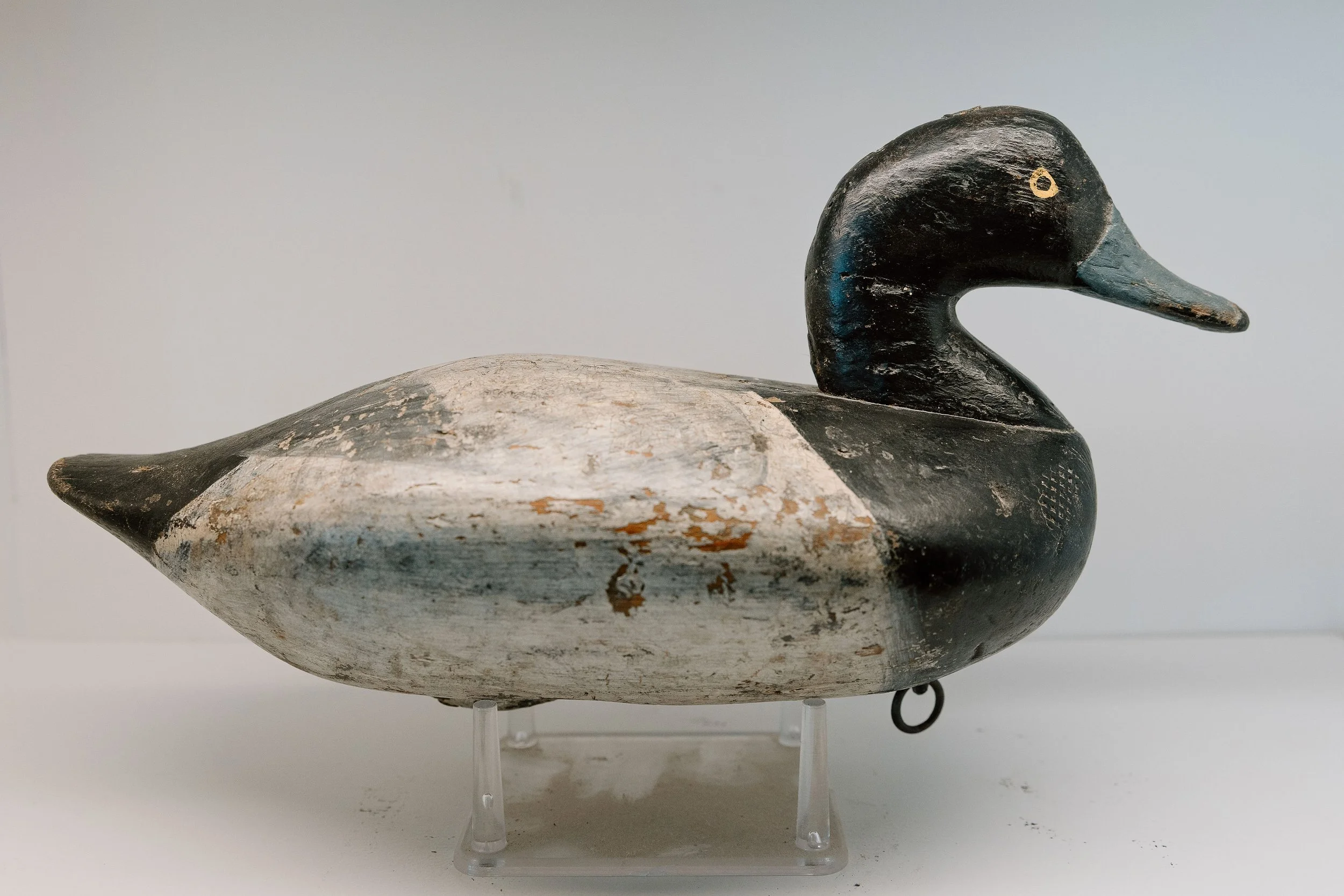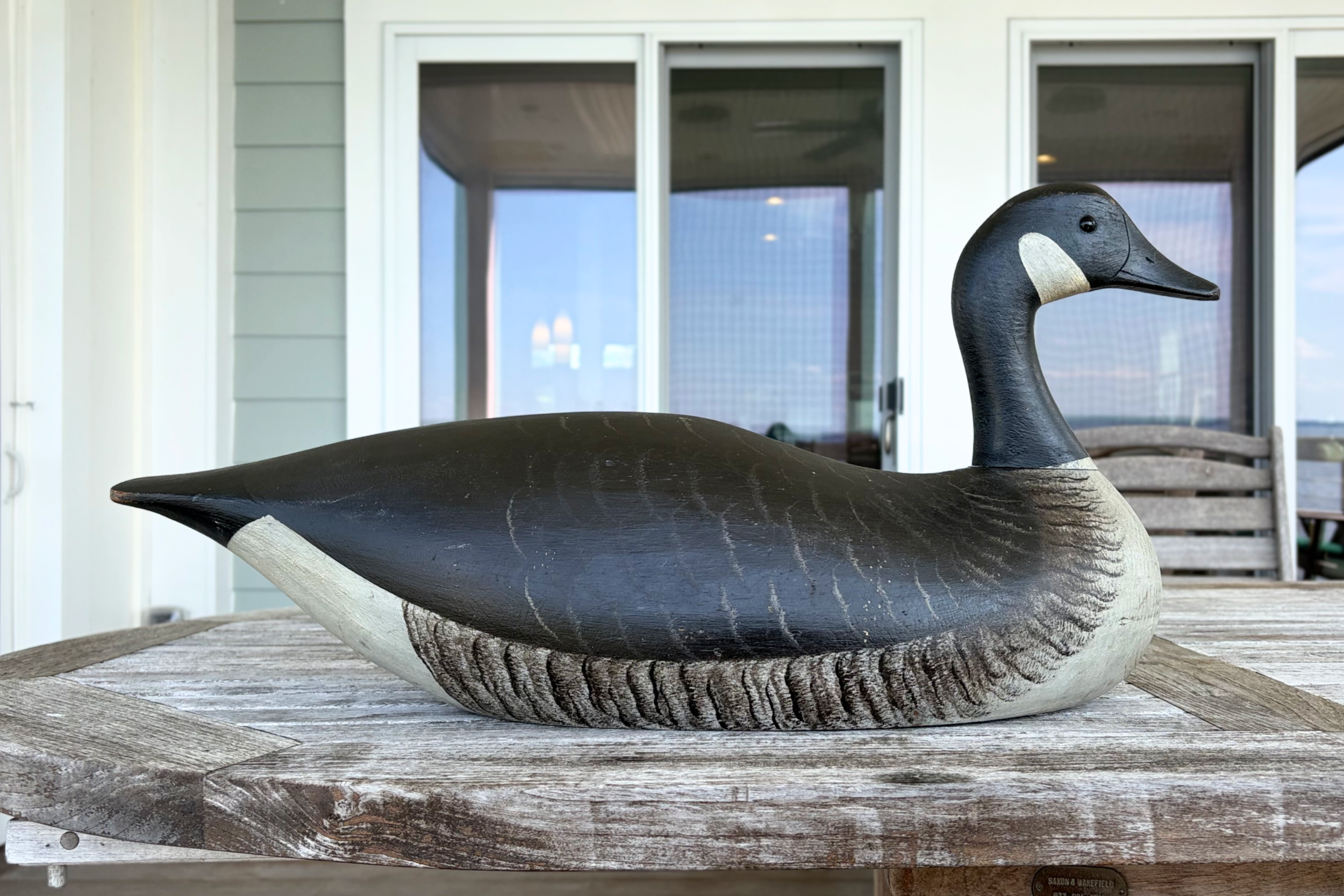
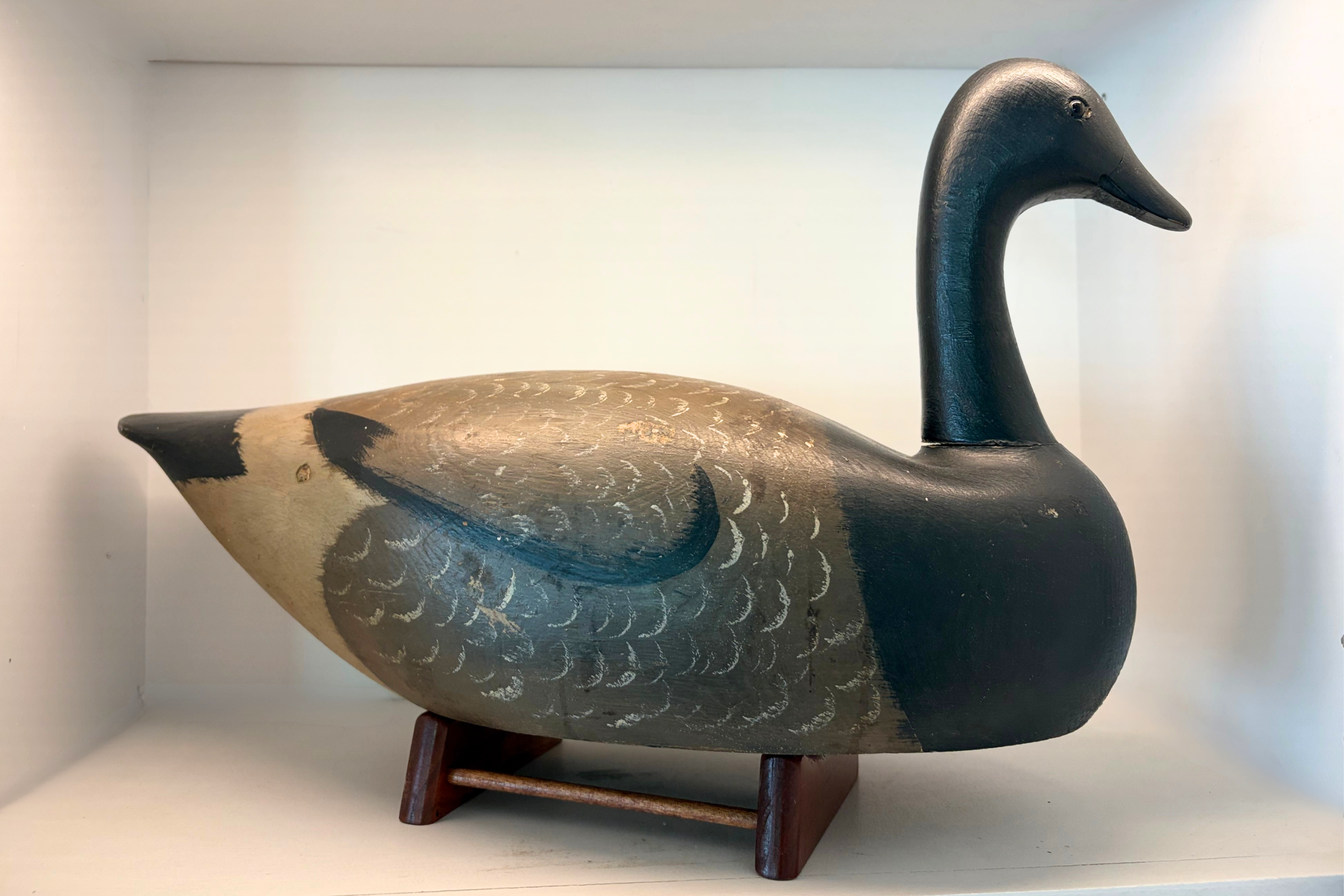
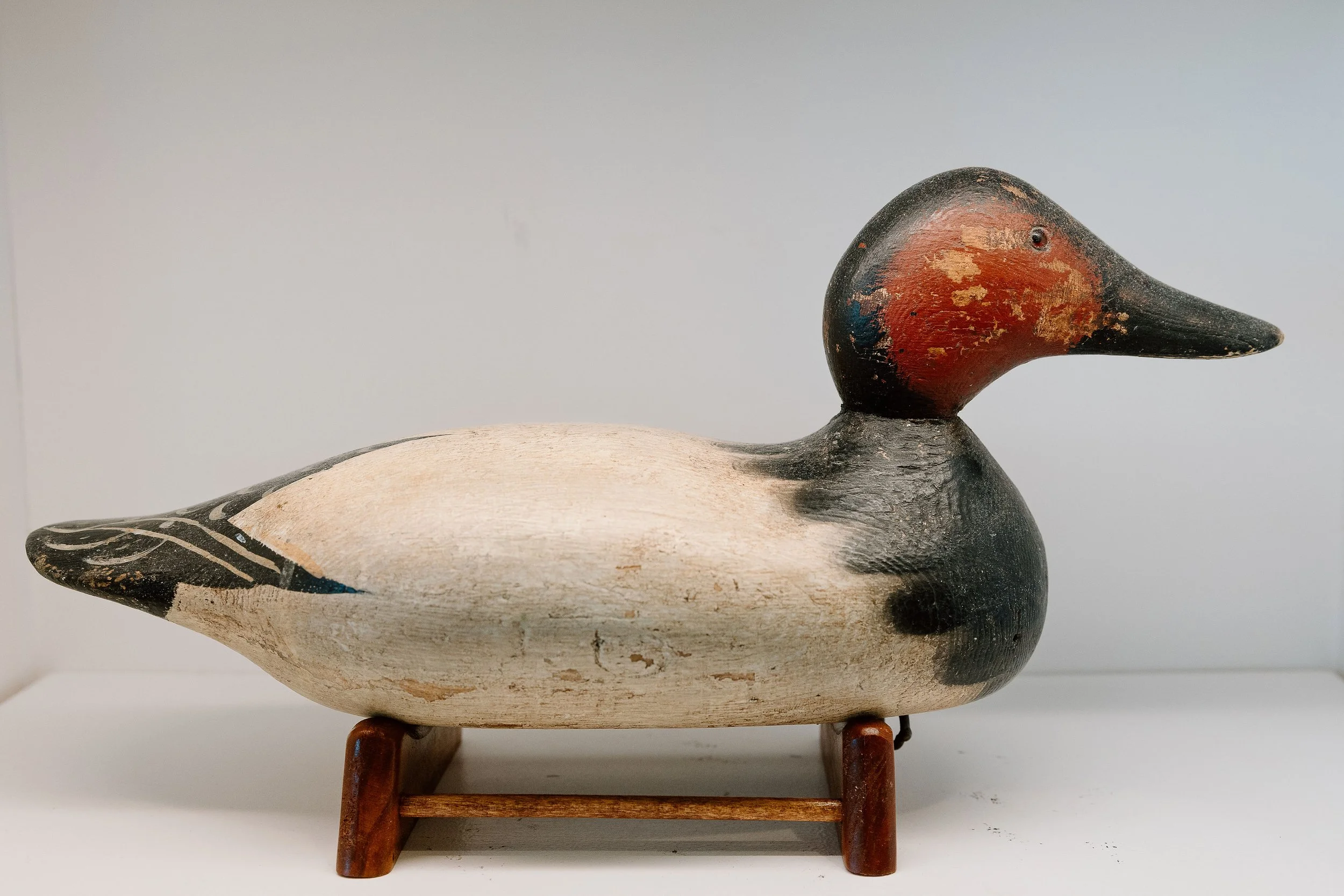
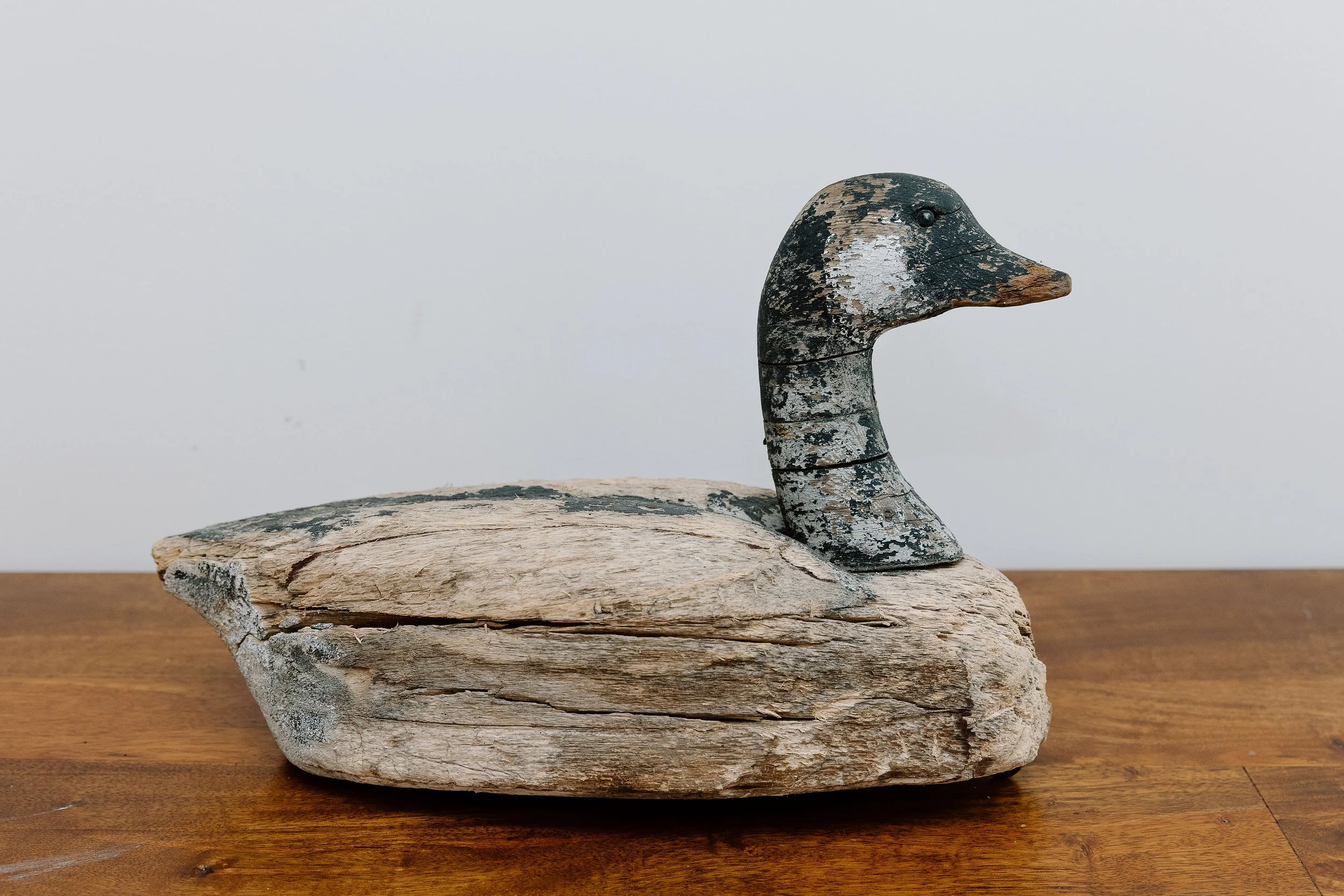
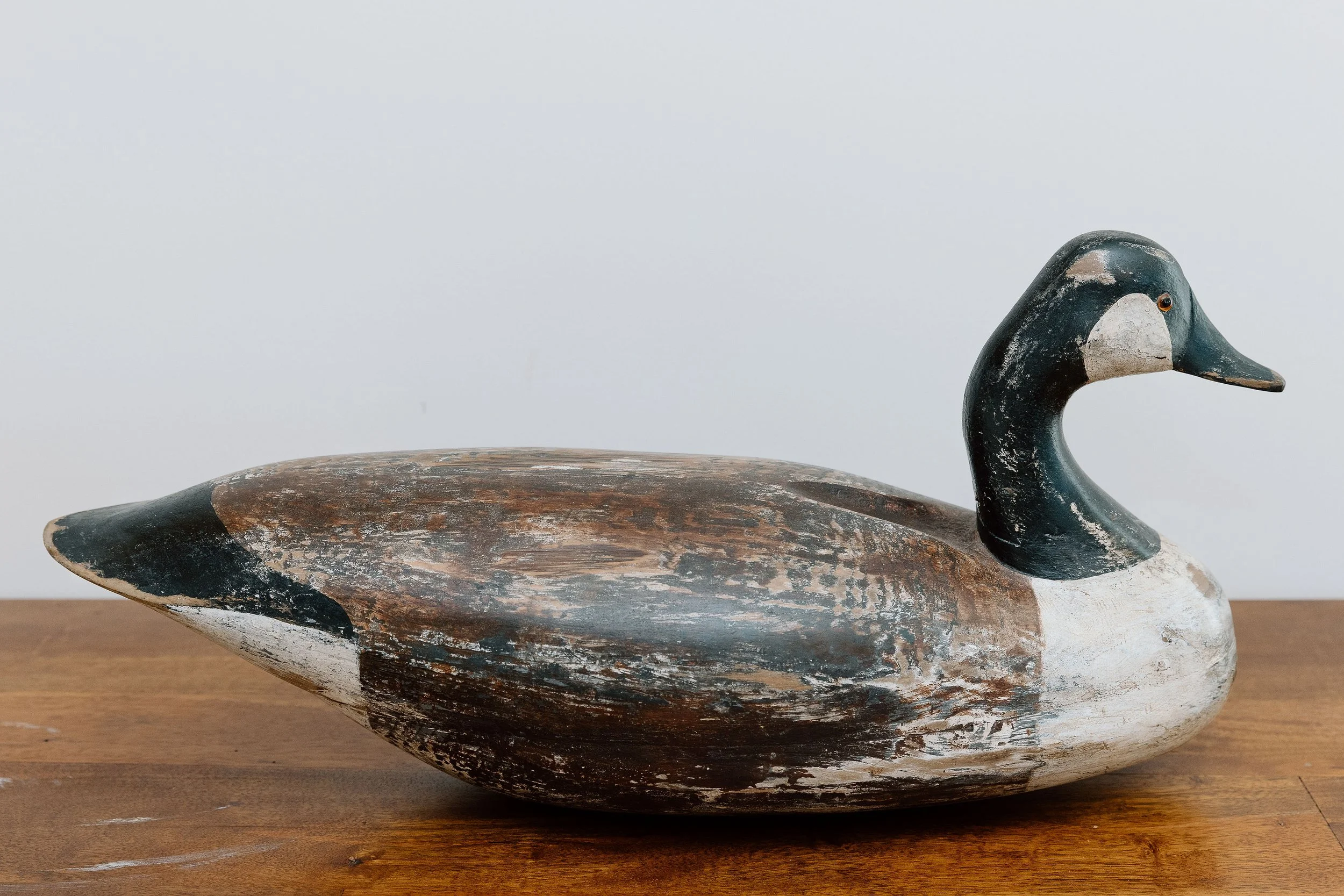
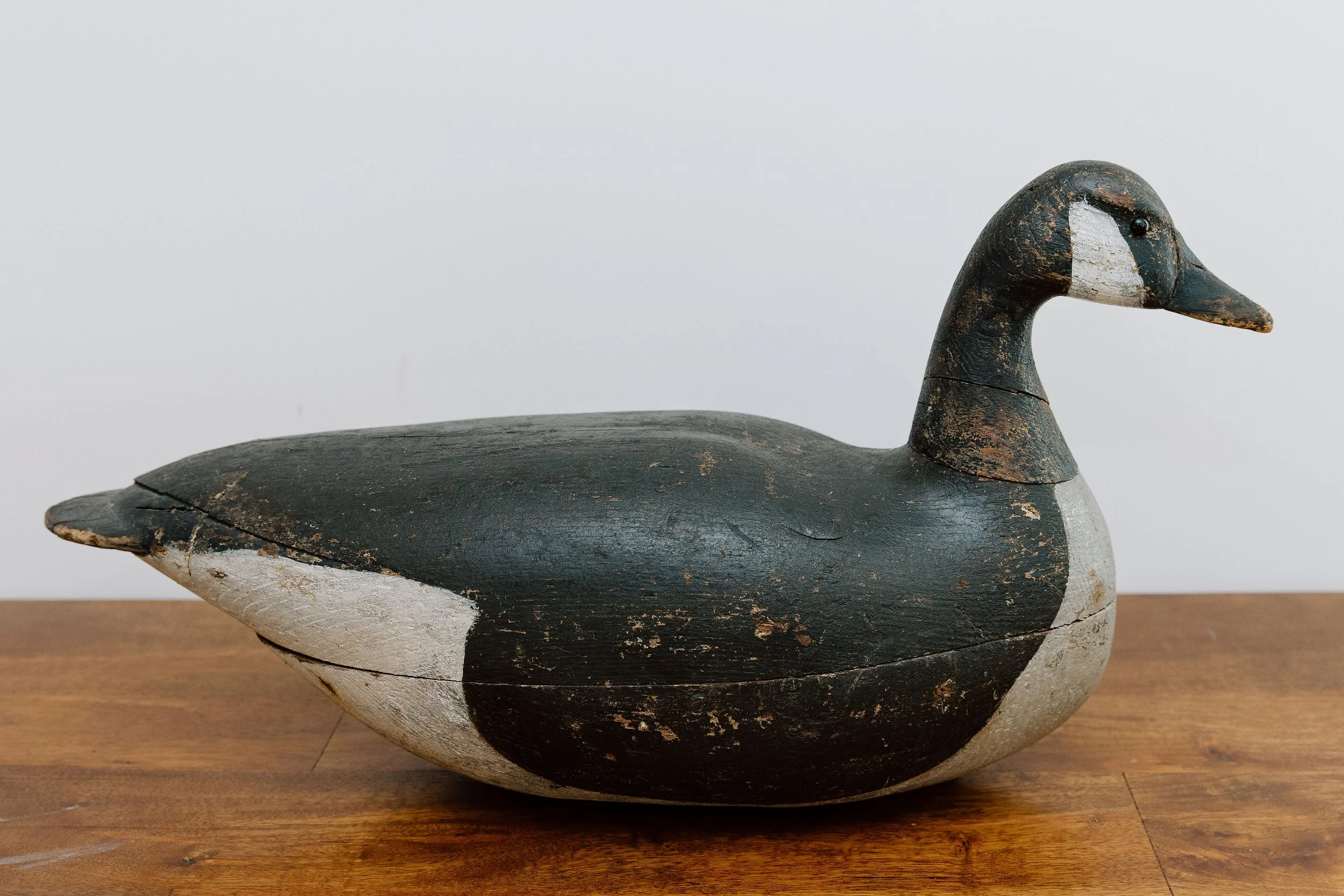
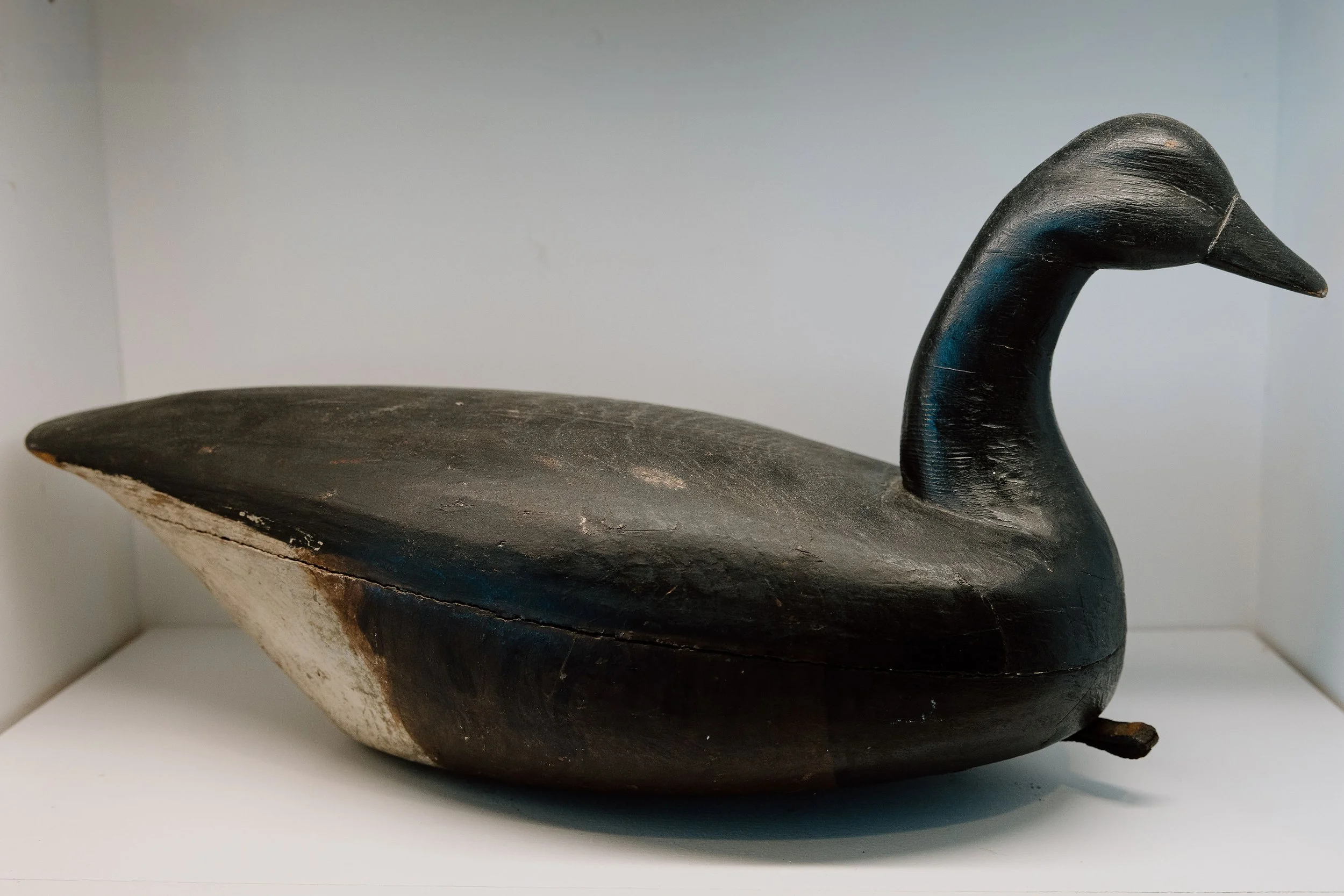
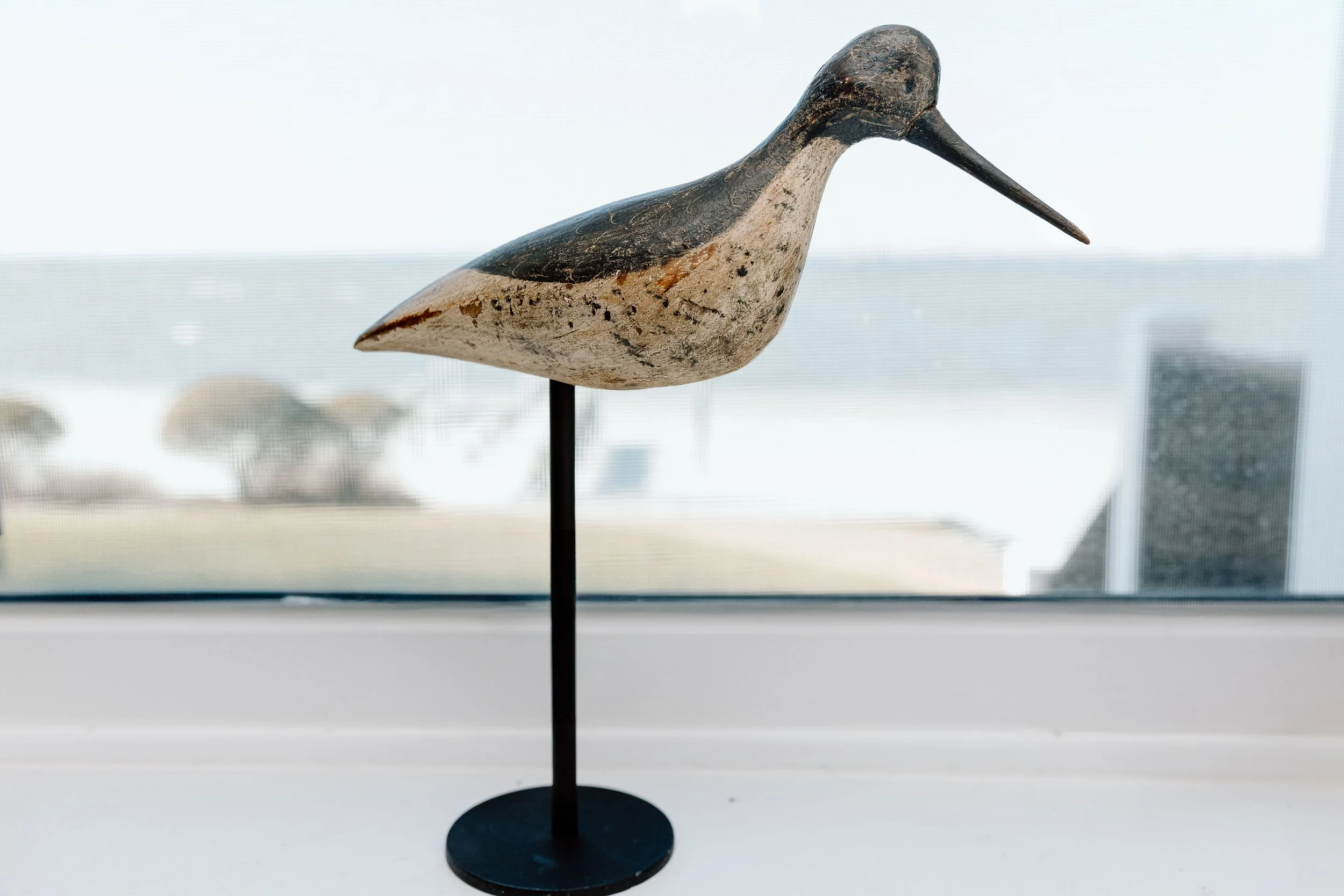
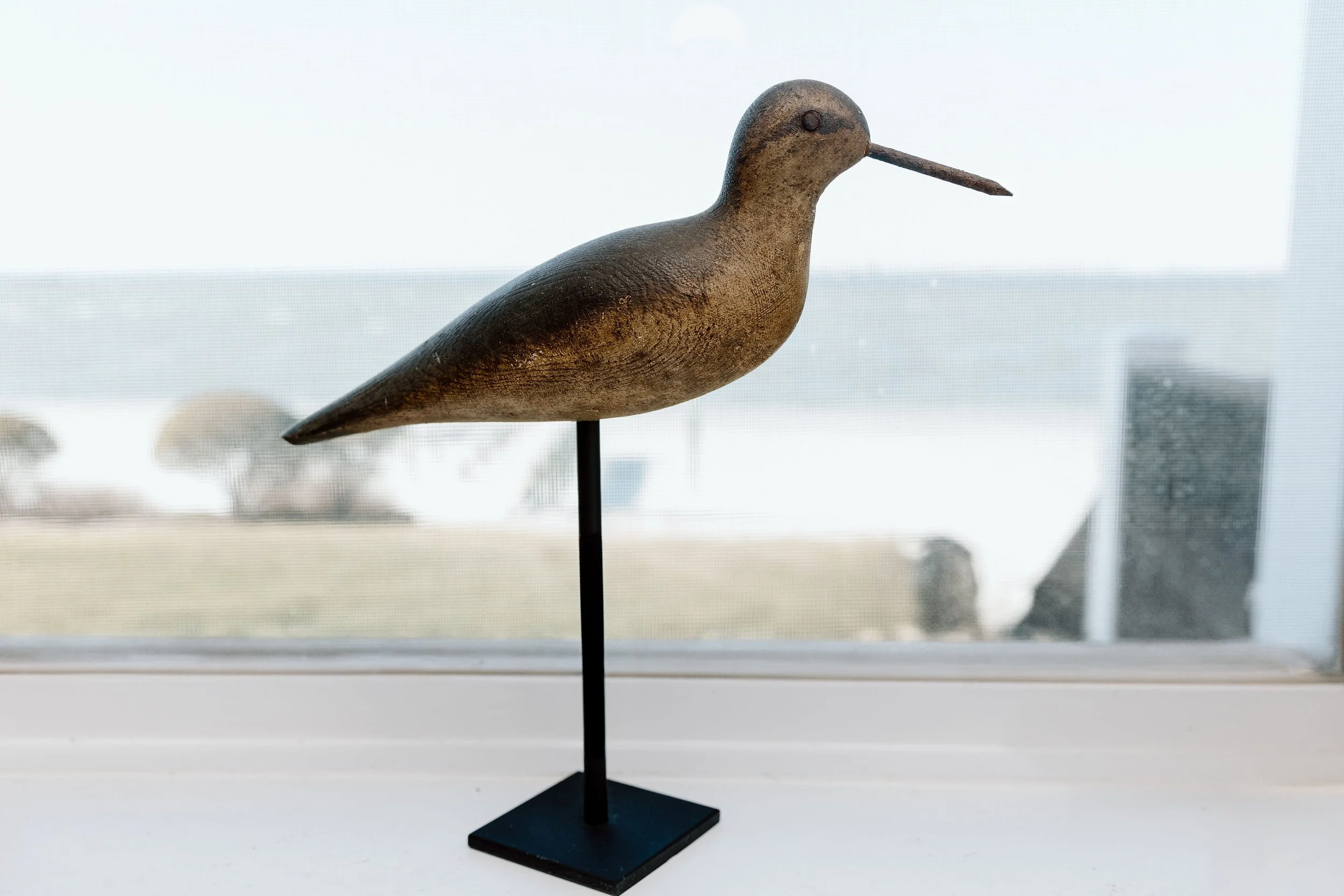
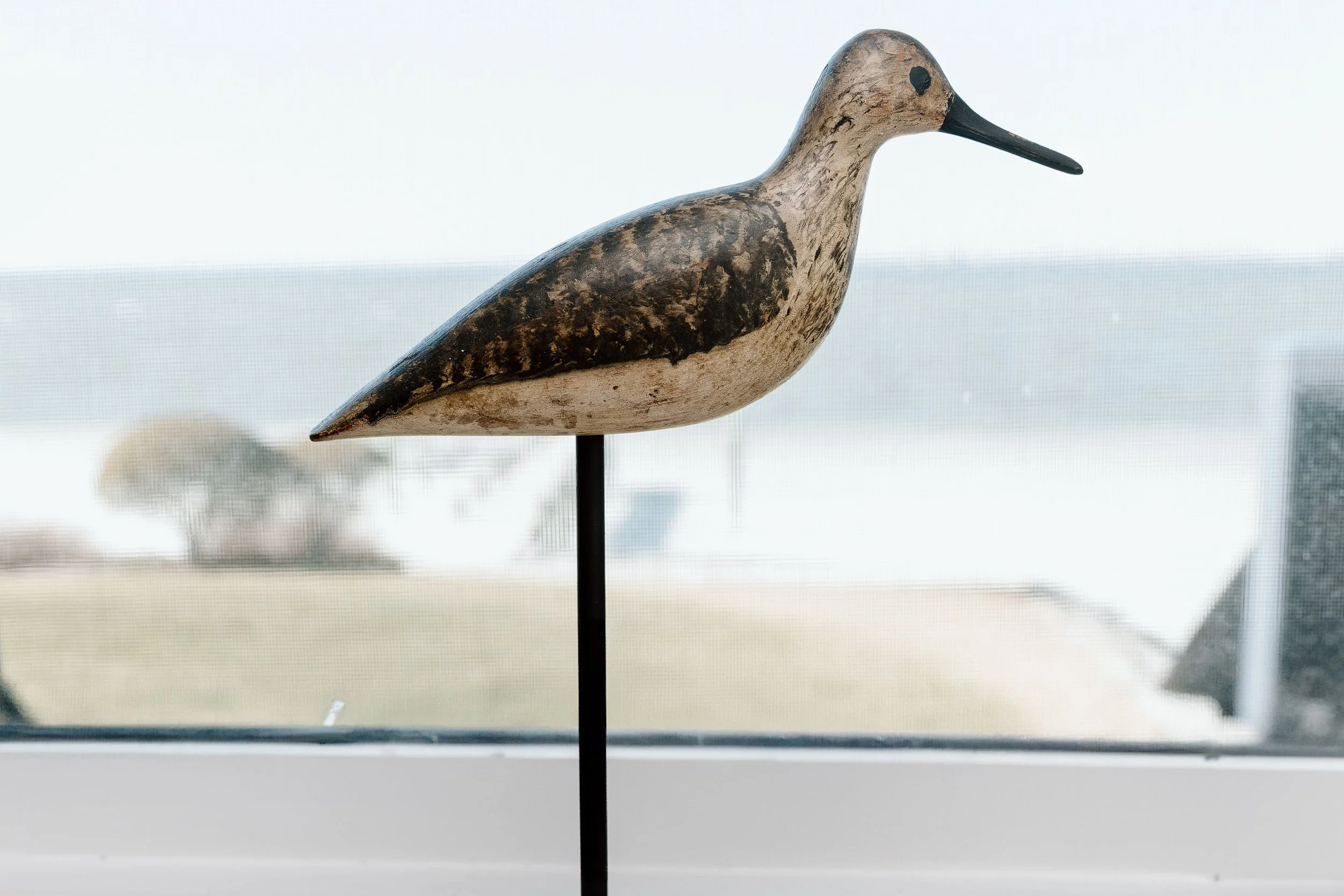
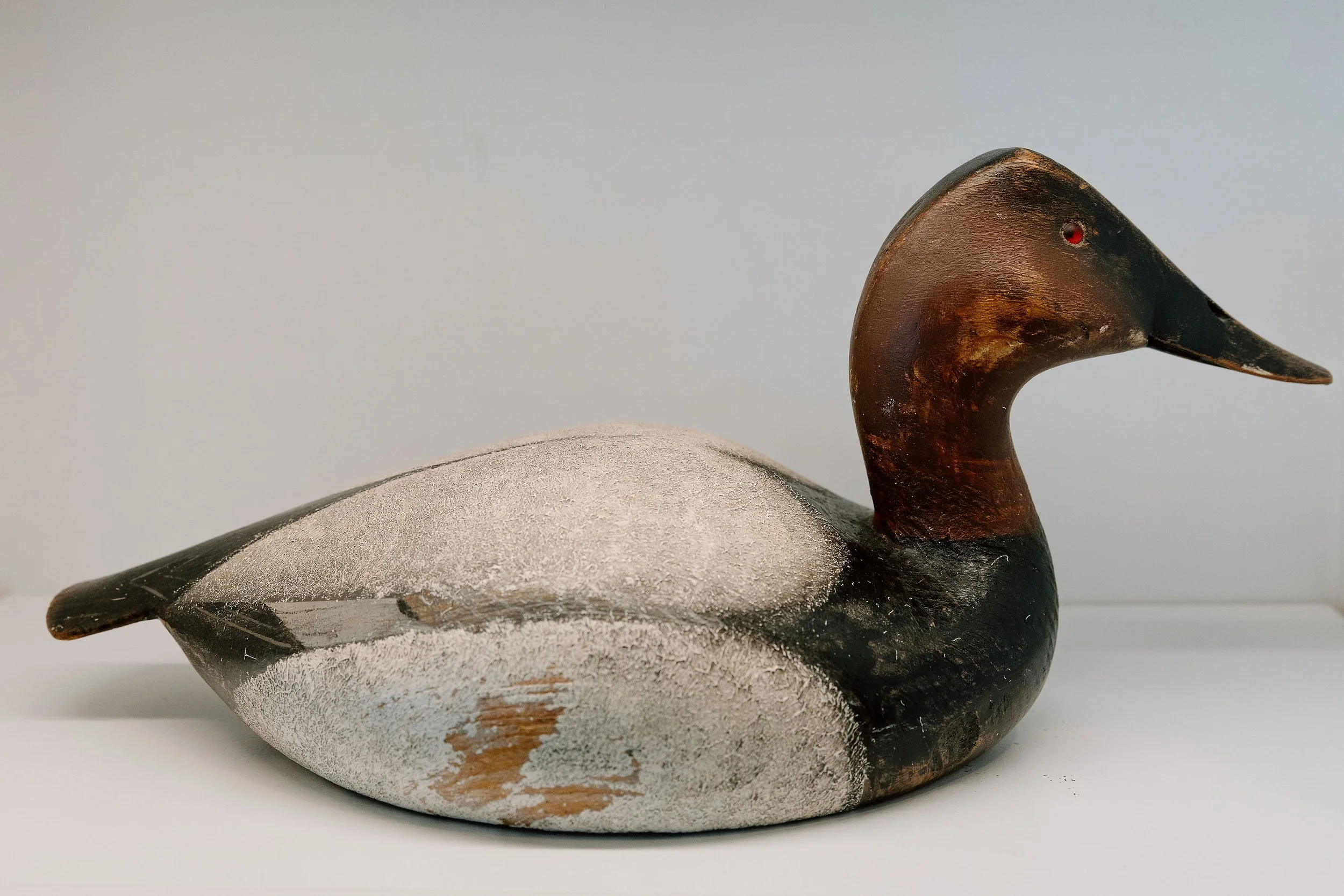
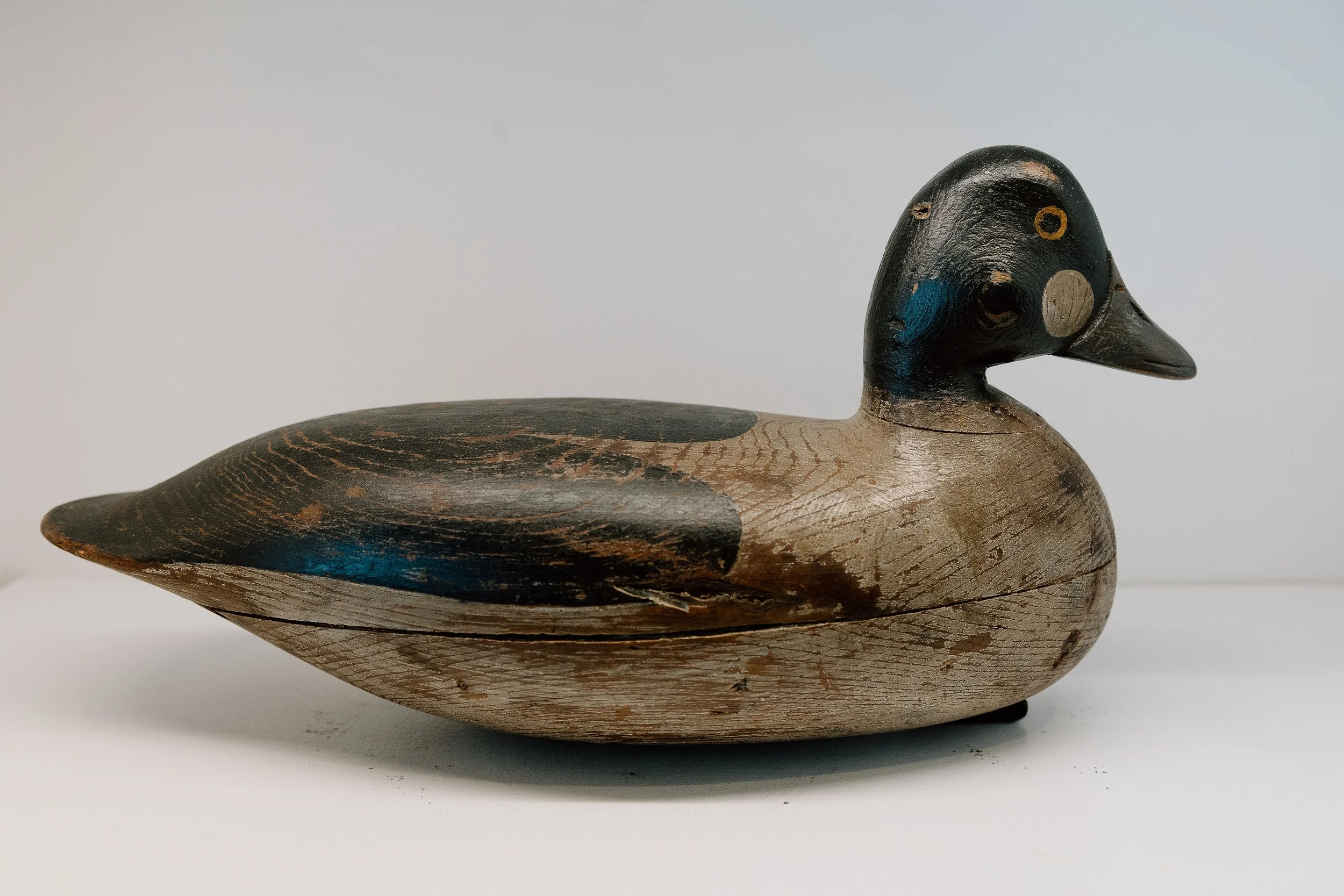
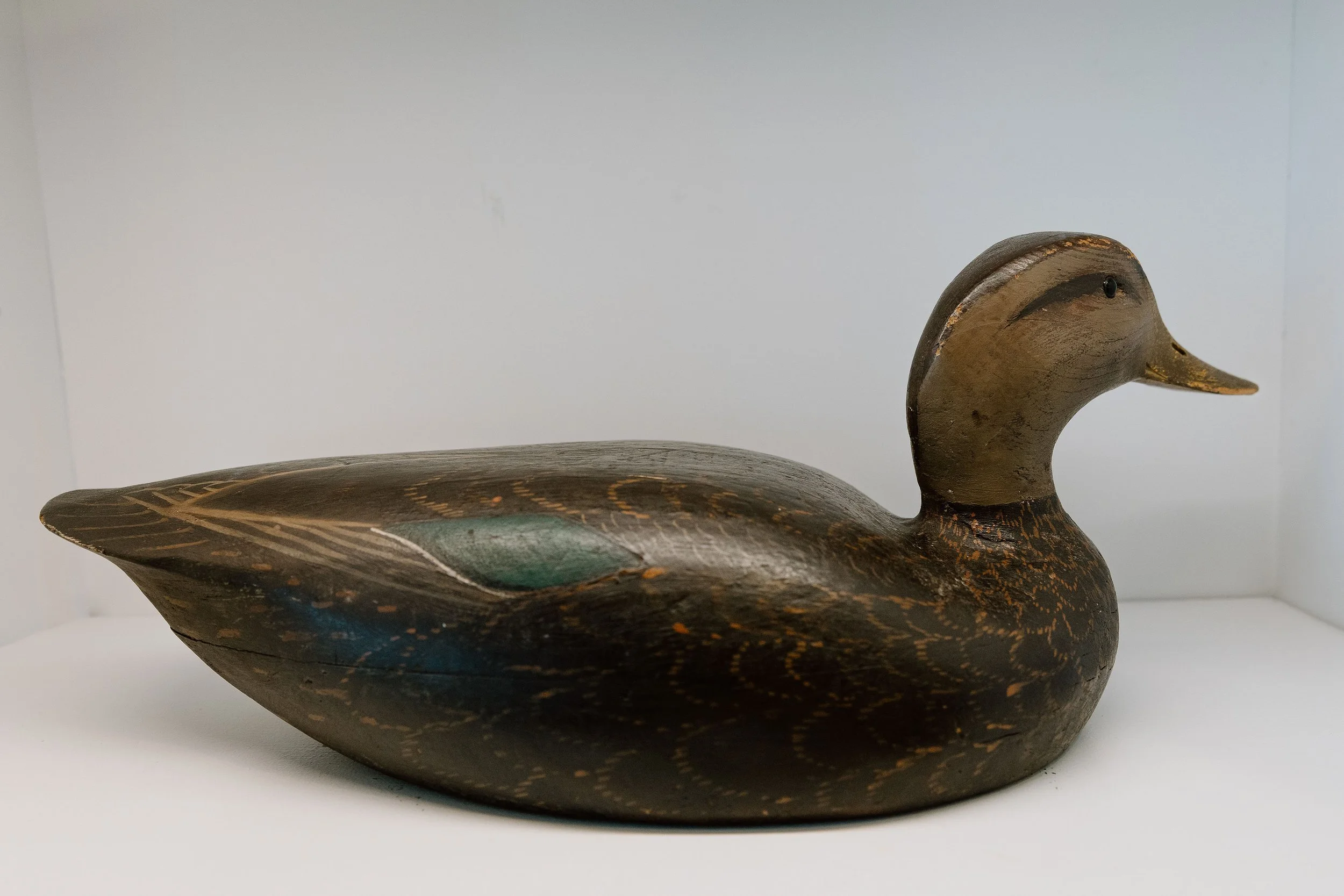
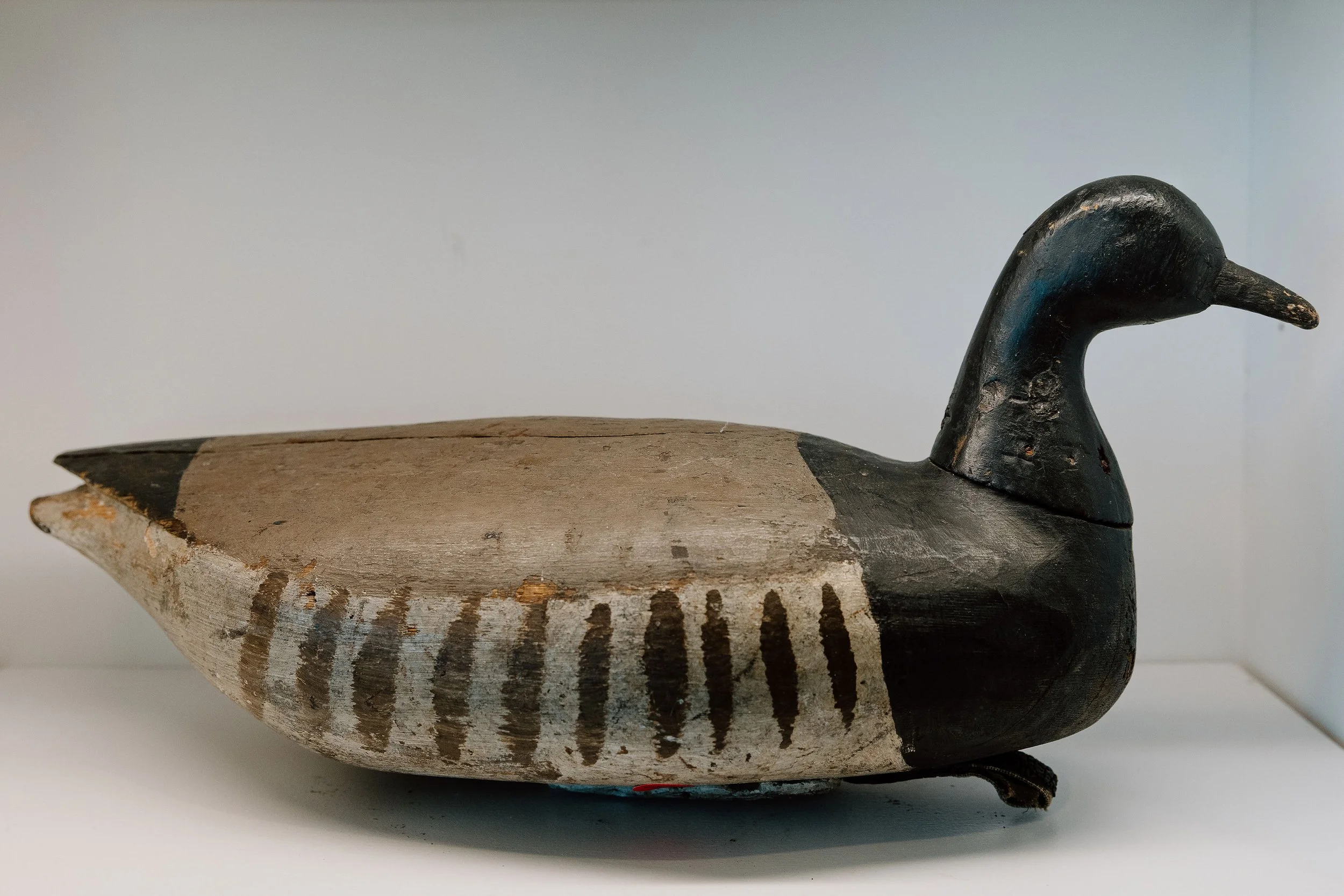
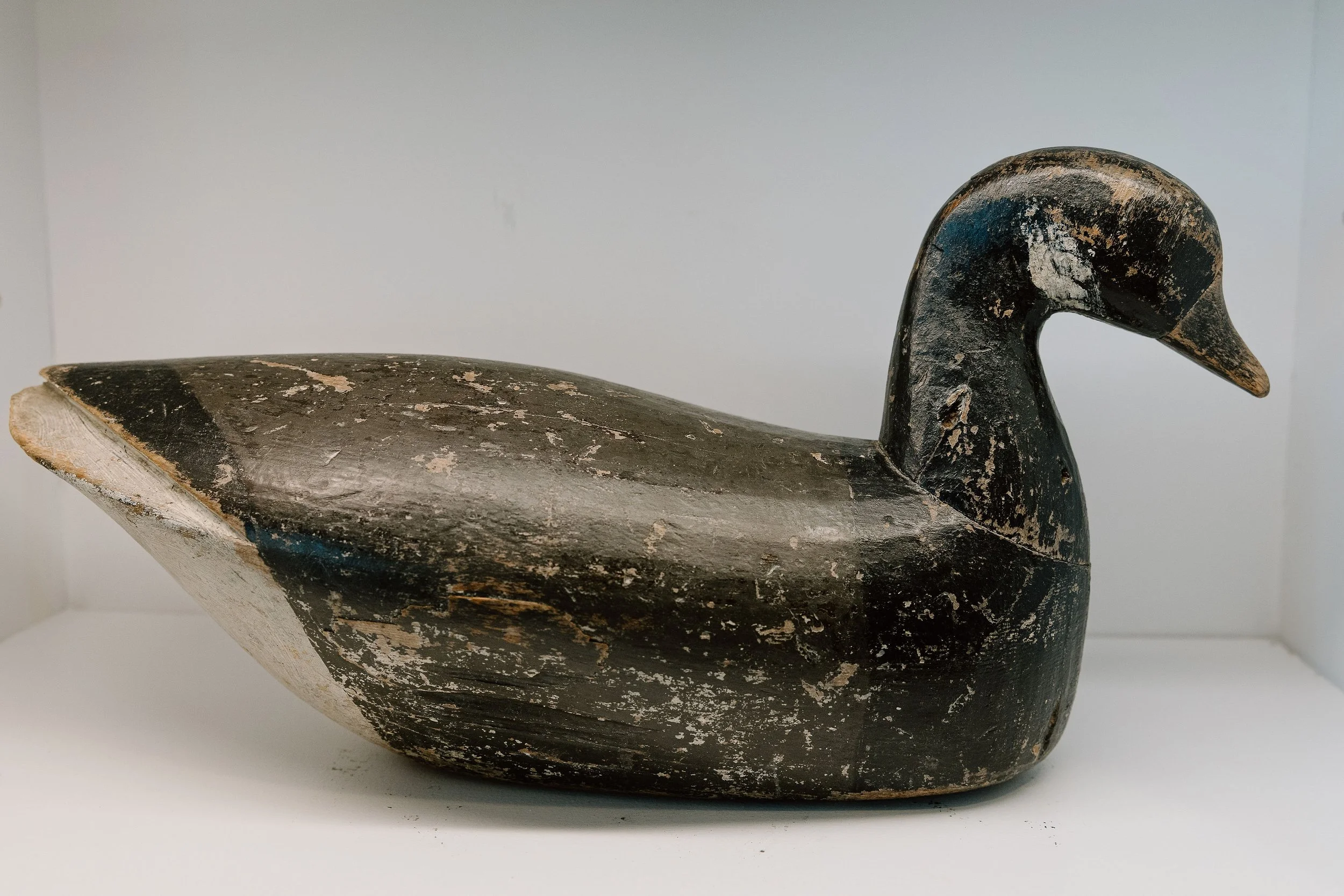
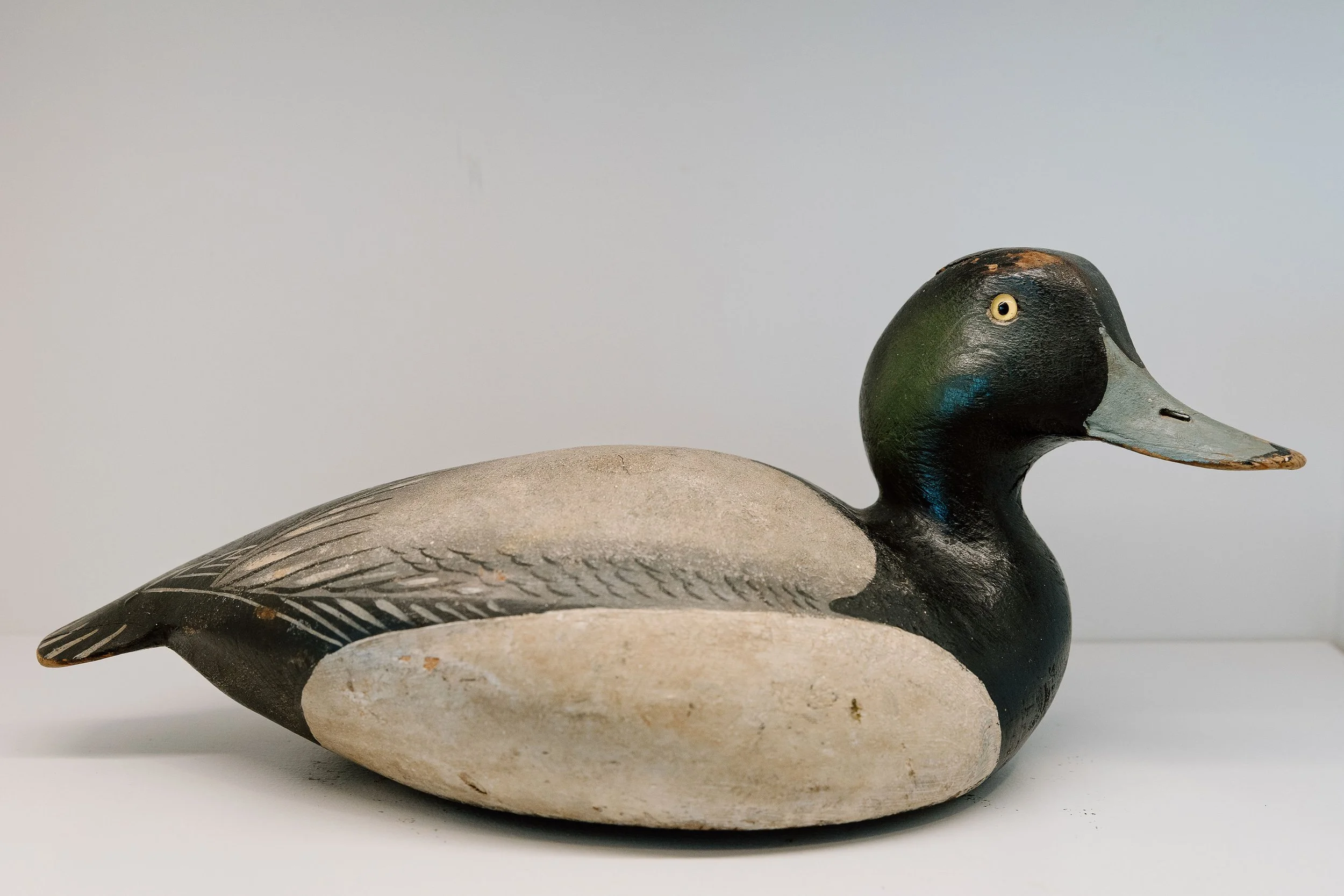
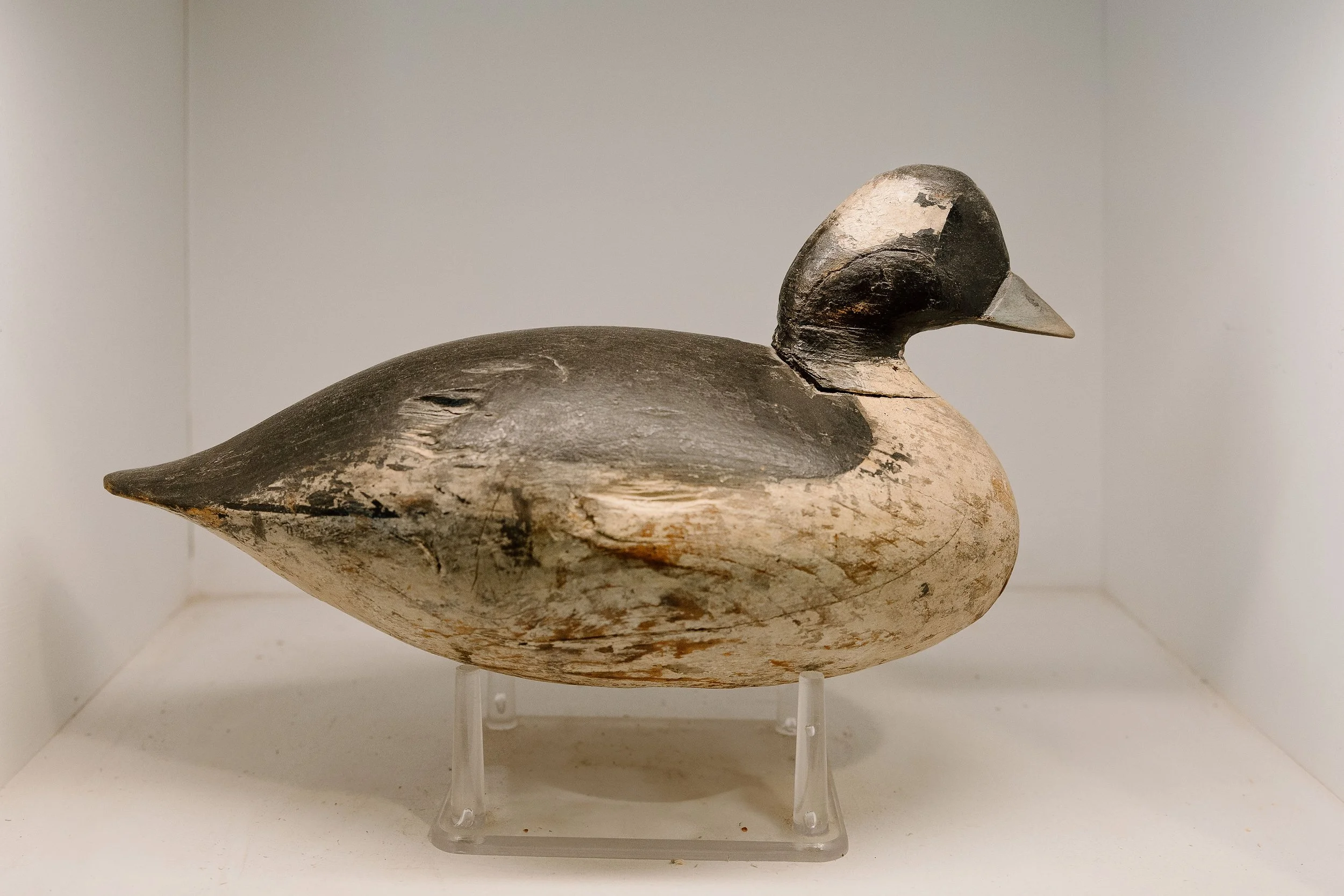
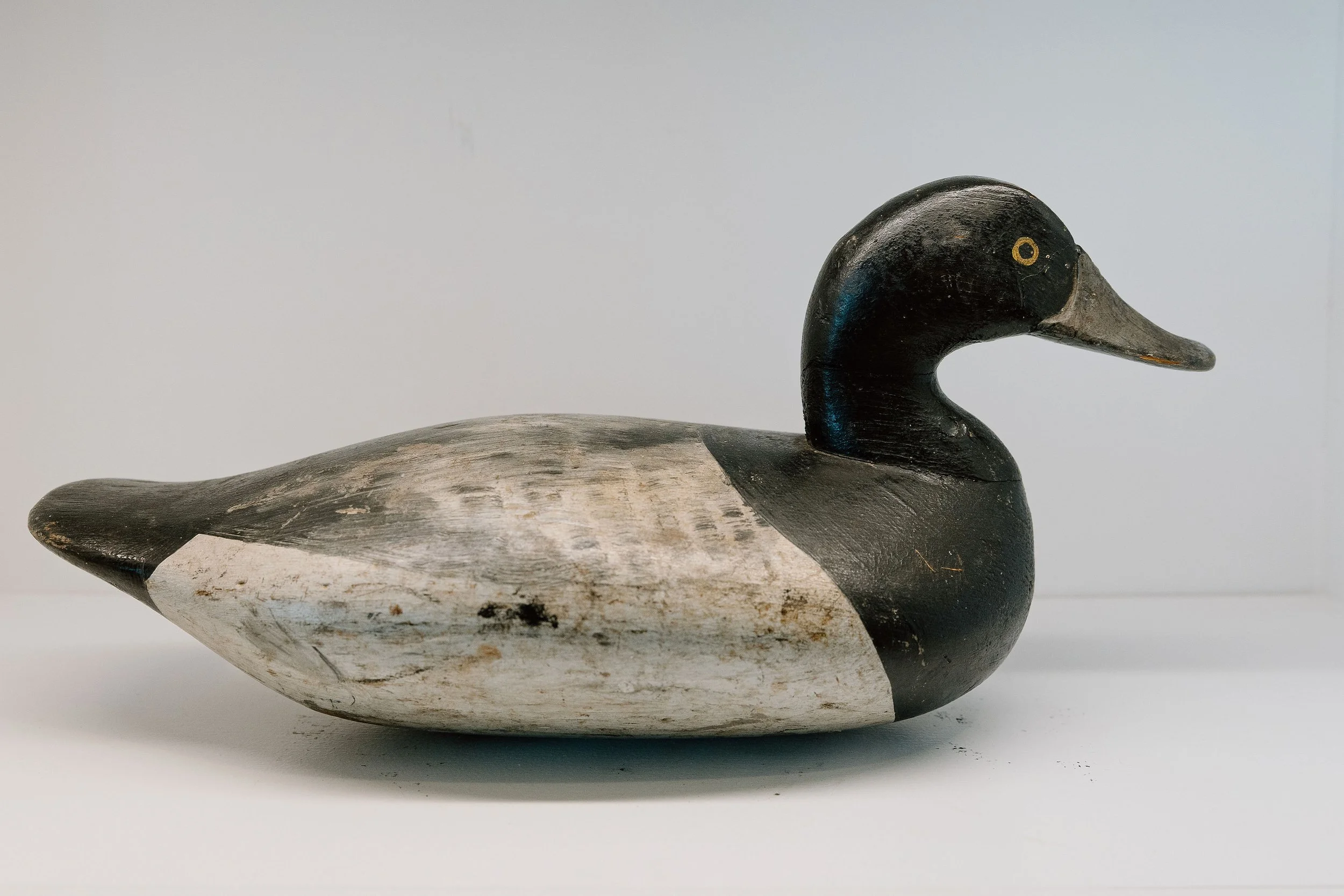
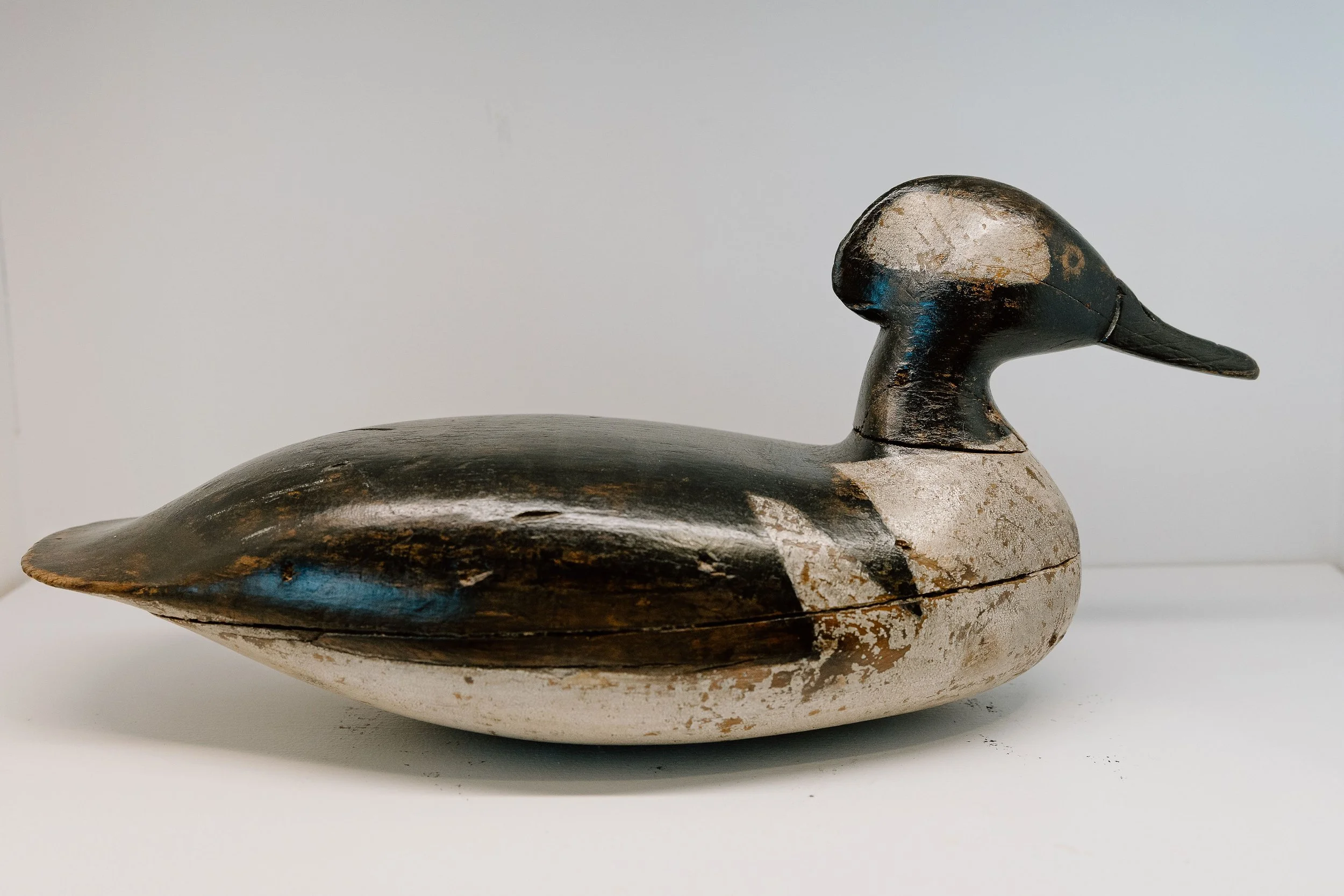
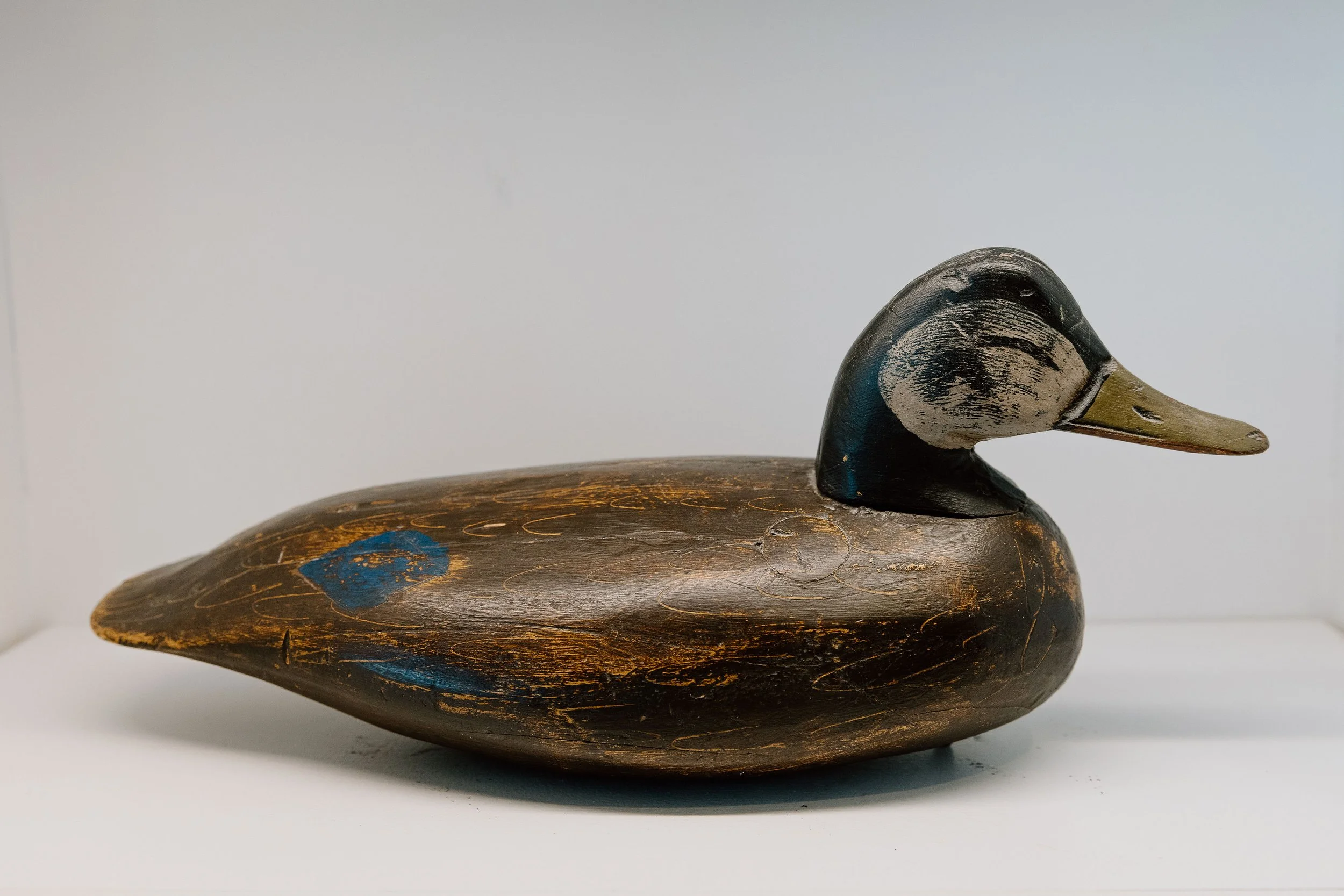
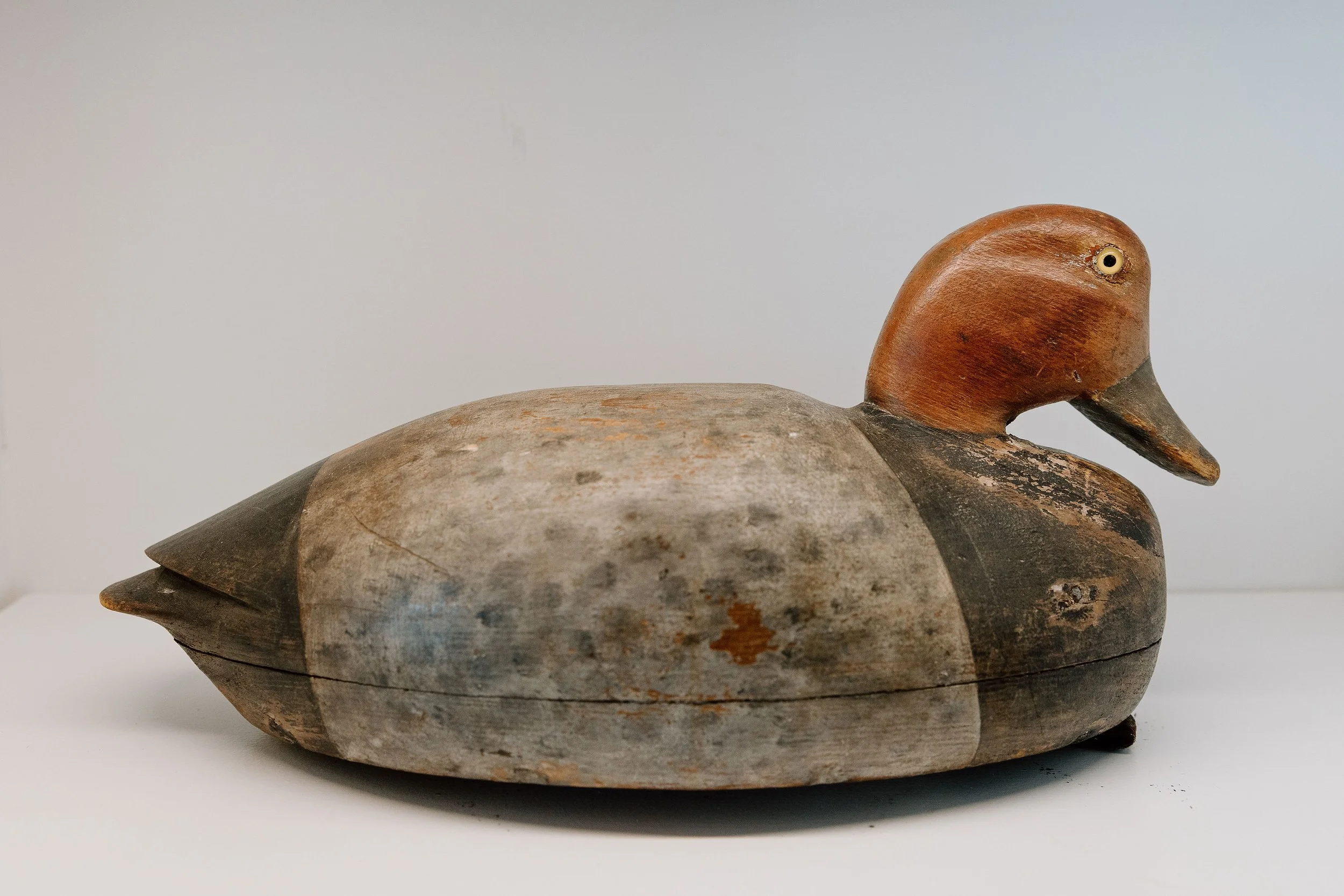
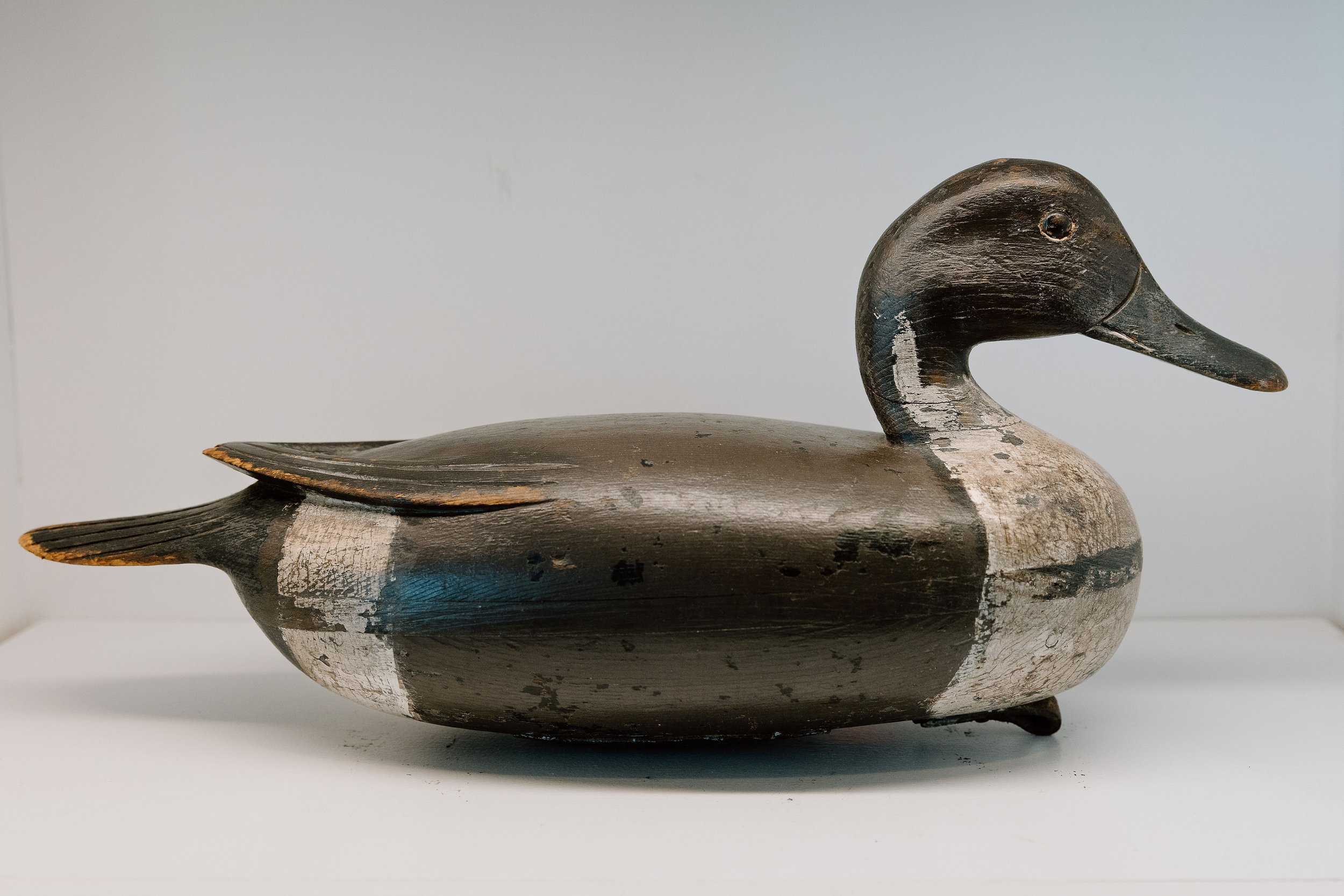
Joseph Lincoln (1859-1938), Accord, Massachusetts. Outstanding Canada goose. Branded “Chouteau” for the rig of Pierre Chouteau. George Thompson collection ink stamp on underside. Measures 26” long. Near mint original paint with a few very minor rubs; typical drying split along the underside that extends onto breast and under tail area.
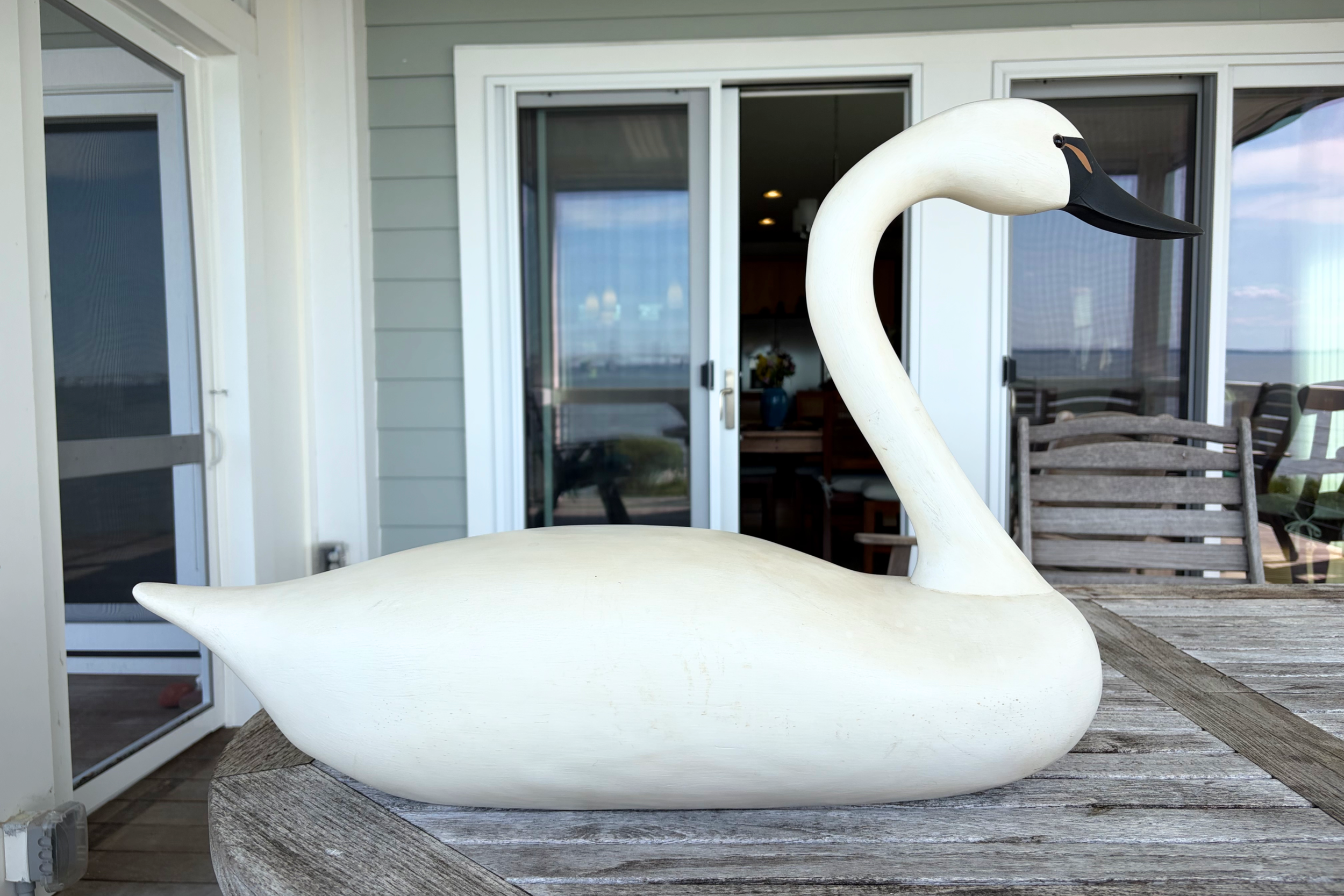
Wildfowler Decoys Inc. (1961-1984), Point Pleasant, New Jersey. Hollow swan with arched neck. Signed and dated by its maker, Charles Birdsall, on the underside. Original paint with light wear.
Keyes Chadwick (1865-1958), Oaks Bluff, Massachusetts. Rare working brant with round inlayed lead weight. “TSH” stamped on underside for Theodore Steven Harmon. Measures 18.5 inches long.
Carved by Joe King (1835-1913), Manahakin, NJ, circa 1880. Rare and historic brand from the rig of Elkanah Cobb (1852-1936).
Dave “Umbrella” Watson (1851-1938), Chincoteague Island, VA.
Very strong paint which is mostly original with possible “gunning touch up” in areas, unable to fully tell as not obvious and too old to show with the black light. Surface is very clean, strong and dry finish, the paint work is classic Watson. Full size with glass eyes.
Bay Head, NJ. Old repaint.
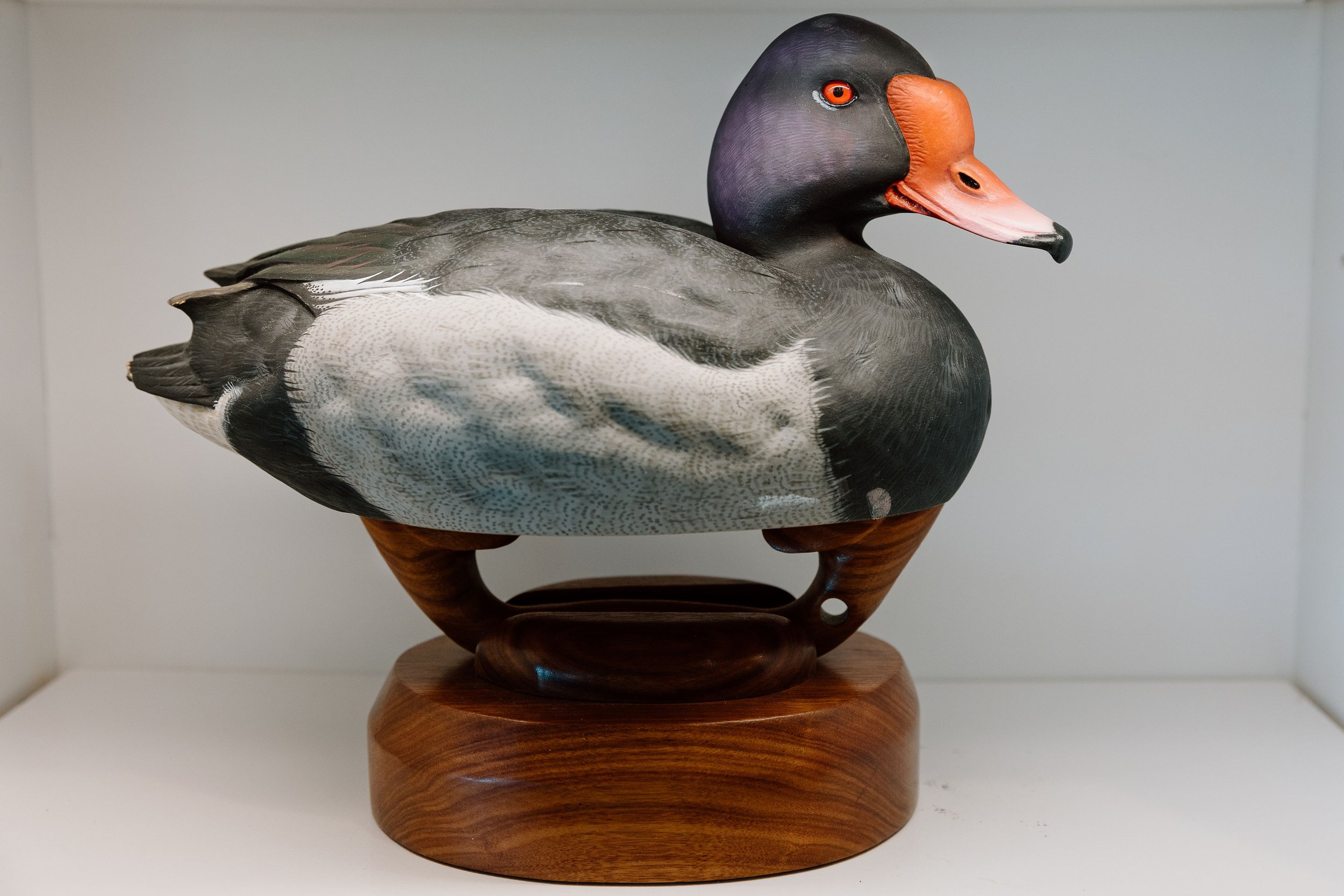
Rich Smoker (1952- ), Marion, MD. Rosy-billed pochard.
Born into a family of outdoorsmen in 1952, Smoker carved his first decoys with his father on the banks of the Susquehanna River in Selinsgrove, Pennsylvania, his hometown. As Smoker’s love of carving grew, he began taking trips to Maryland, where he learned from many masters, including Lem and Steve Ward. Smoker is the recipient of more than 500 ribbons and 100 best-in-show recognitions. He is a two-time winner of the Ward World Championship as well as a 2019 National Endowment for the Arts Heritage Fellow.
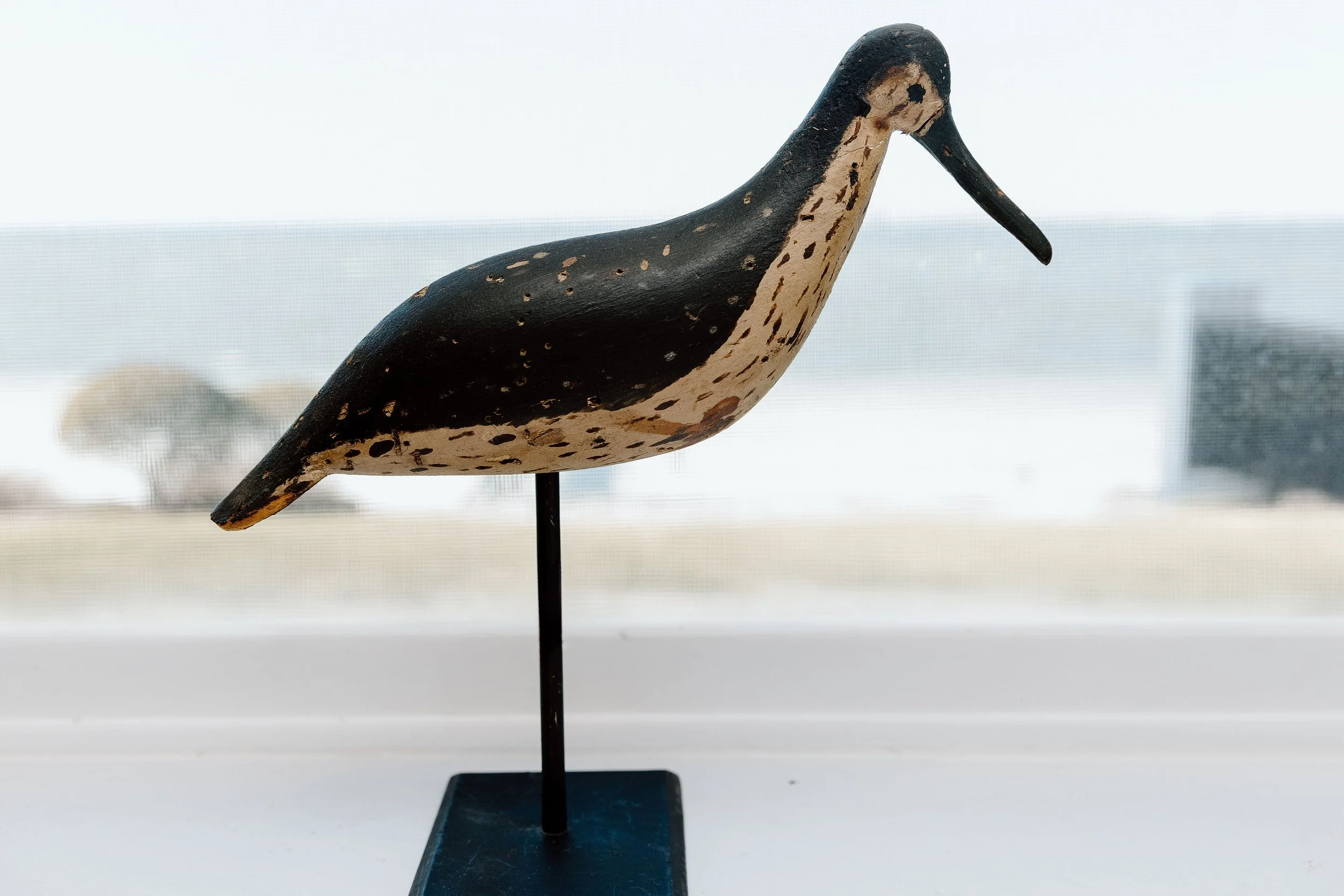
Early and scarce Yellowlegs decoy by Charles Clark, Chincoteague Island, VA circa 1890-1920. Ex-George Ross Starr collection. Excellent all original paint. Splined bill is original which is rare on a Clark shorebird, especially in original paint. Solid carved balsa body. Has a few shot scars and old blood stain on the belly area.
Ira Hudson (1873 - 1949), Chincoteague, VA.
Yellowlegs. Scratch feather paint detail. Original paint with moderate wear. Bill is a later replacement.
Harry V. Shourds (1861-1920) Tuckerton, NJ.
Early yellowlegs. Fat body style. “JF” stamped in the underside. Original paint with very minor wear. Bill is a professional replacement.
Rich Smoker (1952- ), Marion, MD. Rosy-billed pochard.
Born into a family of outdoorsmen in 1952, Smoker carved his first decoys with his father on the banks of the Susquehanna River in Selinsgrove, Pennsylvania, his hometown. As Smoker’s love of carving grew, he began taking trips to Maryland, where he learned from many masters, including Lem and Steve Ward. Smoker is the recipient of more than 500 ribbons and 100 best-in-show recognitions. He is a two-time winner of the Ward World Championship as well as a 2019 National Endowment for the Arts Heritage Fellow.
Rich Smoker (1952- ), Marion, MD. Rosy-billed pochard.
Born into a family of outdoorsmen in 1952, Smoker carved his first decoys with his father on the banks of the Susquehanna River in Selinsgrove, Pennsylvania, his hometown. As Smoker’s love of carving grew, he began taking trips to Maryland, where he learned from many masters, including Lem and Steve Ward. Smoker is the recipient of more than 500 ribbons and 100 best-in-show recognitions. He is a two-time winner of the Ward World Championship as well as a 2019 National Endowment for the Arts Heritage Fellow.
Harry V. Shourds (1861-1920) Tuckerton, NJ.
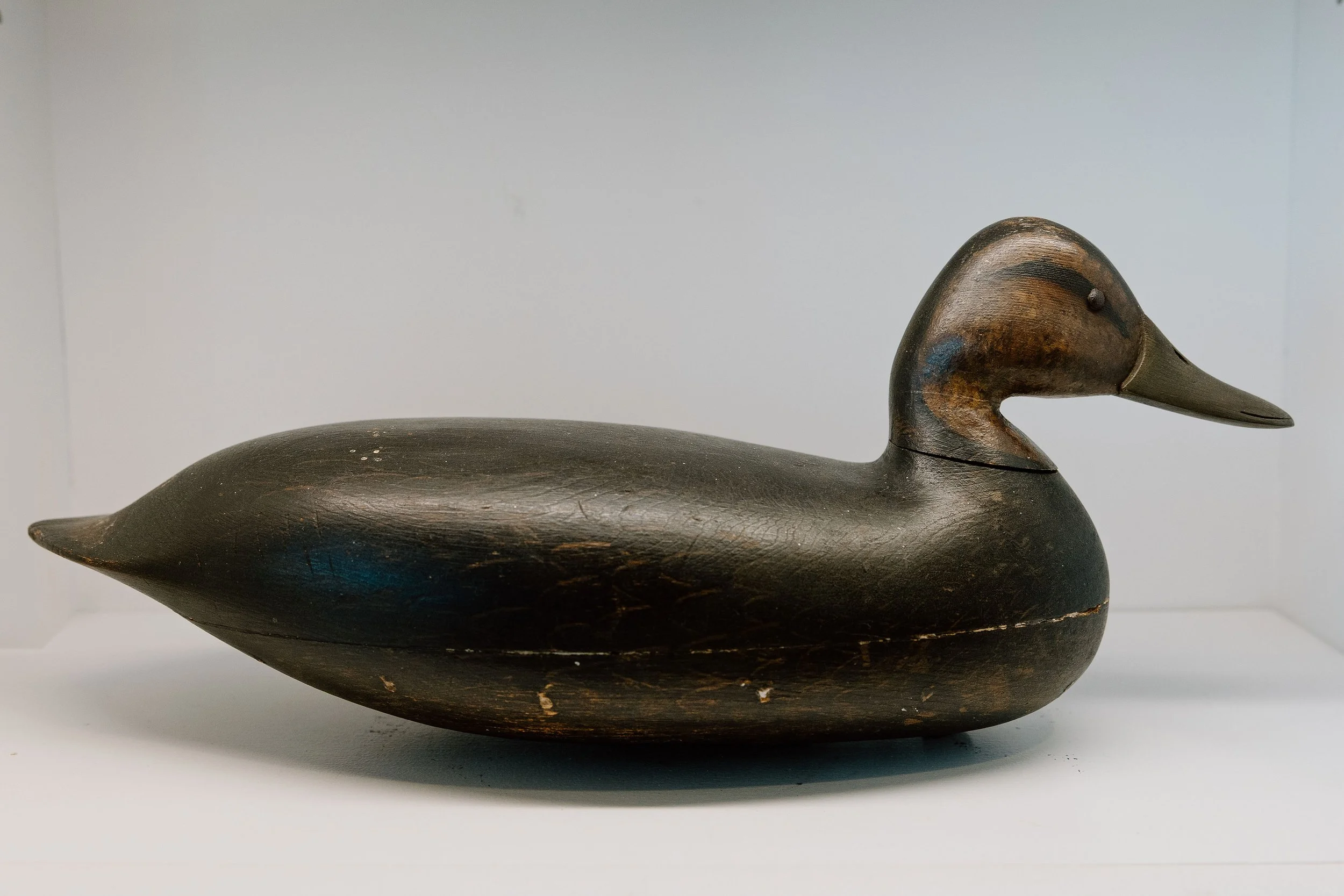
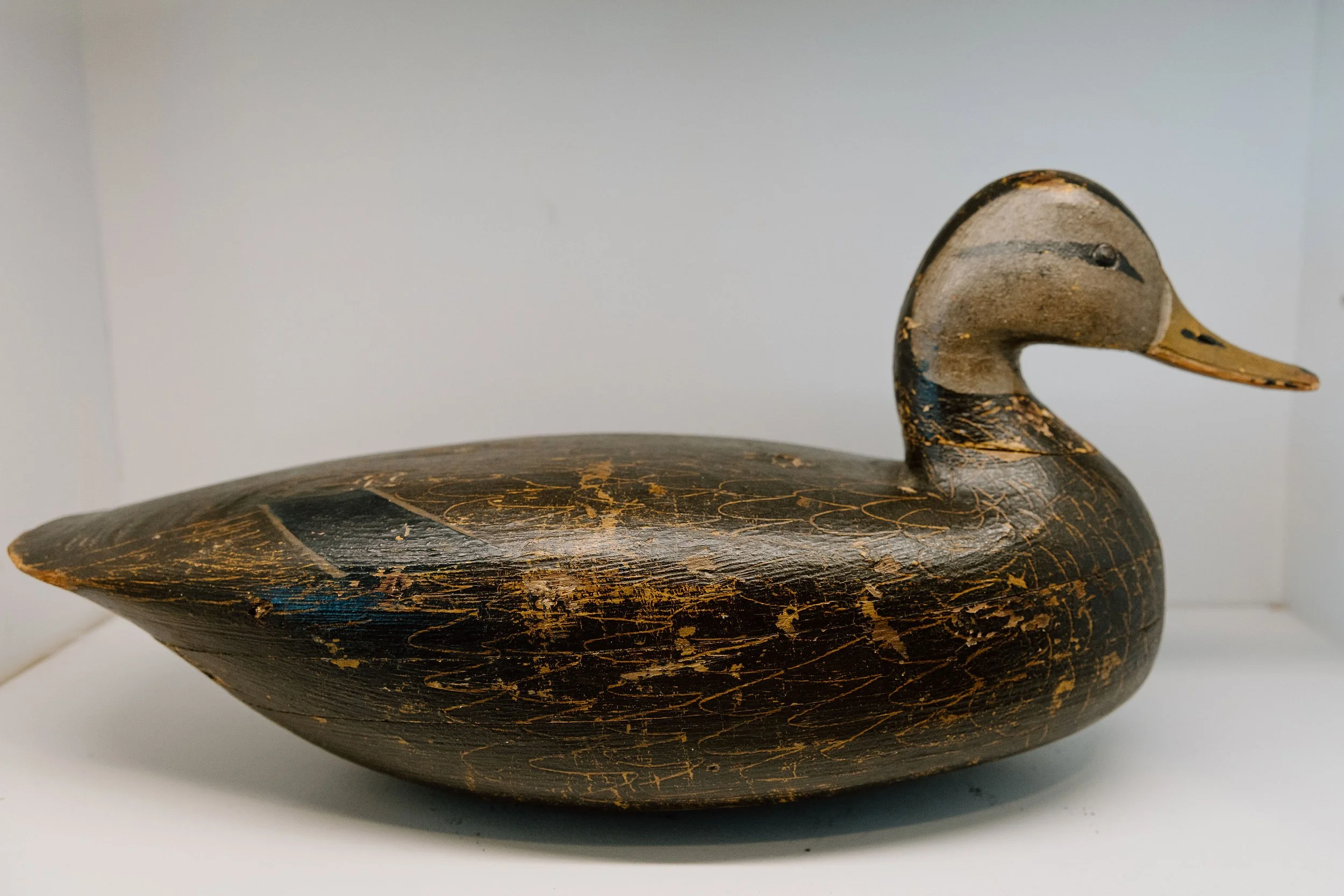
Hollow carved black duck with scratch feather paint detail and tack eyes. Original paint with minor to moderate wear. Early repair to crack in neck.
Rare “JC Kruger rig” black duck by Ira Hudson (1876-1949), Chincoteague Island, VA. Has “JCK” scribed in pad weight. Has all original paint with very little wear for the age and useage. No repairs or touch ups of any kind.
Ward Brothers, Crisfield, MD. Paint surface restored by Lem Ward. Bill reworked and tail chip reattached at the same time.
Harry V. Shourds (1861-1920) Tuckerton, NJ.
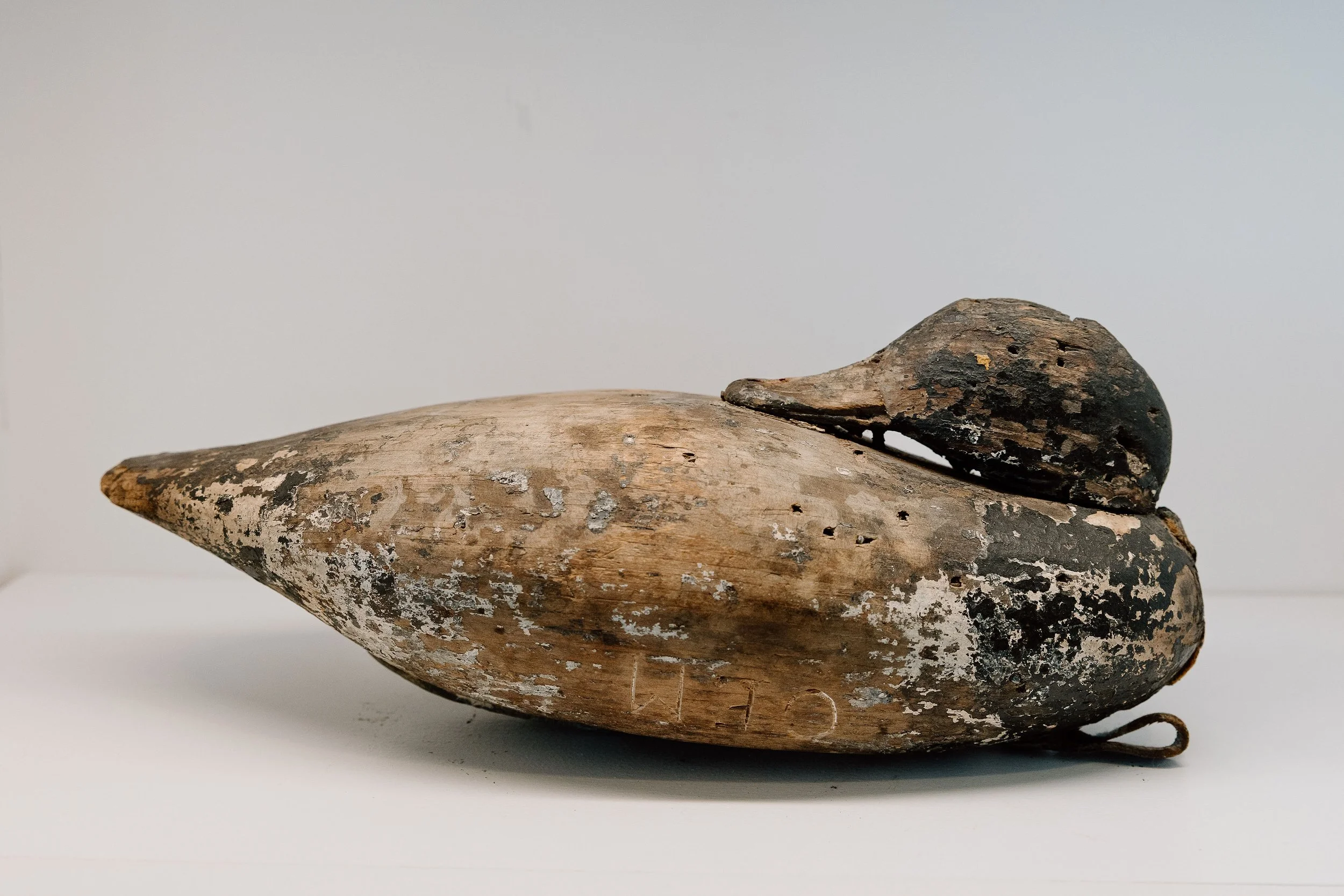
Goldeye drake. Hollow carved with raised neck seat and inlayed lead weight. Original paint iwth moderate flaking and wear.
Lem T. Ward (1896-1984), Crisfield, MD. Black duck decoy, branded “Dr. Blackwell”.
Lem and his brother, Steve, learned to carve working duck decoys from their father, who also trained them as barbers. All Ward decoys have flat bottoms and the bodies range from heart shaped to oval. The Wards were known for their outstanding artistic ability and used unique painting techniques, including stippling. Their painting has been called “impressionistic”, as each decoy was unique with its own feathering scheme.
Very early and rare classic Brant by Walter Brady (1860-1945), Oyster, VA. Old repaint with no repairs. Probably less than six known.
There is an open debate about whether these birds are made from Walter Brady or Eli Doughty (1844-1923) of Hogg Island, VA. The Brady rig Brant were thought to be hunted over by President Grover Cleveland who was a frequent hunter on the Shore for several years.
Eli Doughty (1844-1923), Hog Island, VA.
Sculptural solid body brant with relief wingtip carving and slightly turned head. Very early in use repaint with moderate gunning wear.
Ward Brothers, Crisfield, MD. Paint surface restored by Lem Ward (1897–1984).
Ira Hudson (1873-1949), Chincoteague, VA.
Rare. Found fastened to the wall in a local restaurant. Repaint on white.
James T. Holly (1855-1935), Havre de Grace, MD.
Near-mint original paint. Weight removed but otherwise in excellent structural conditions with no repairs.
Harry M. Shourds (1890-1943), Ocean City, NJ.
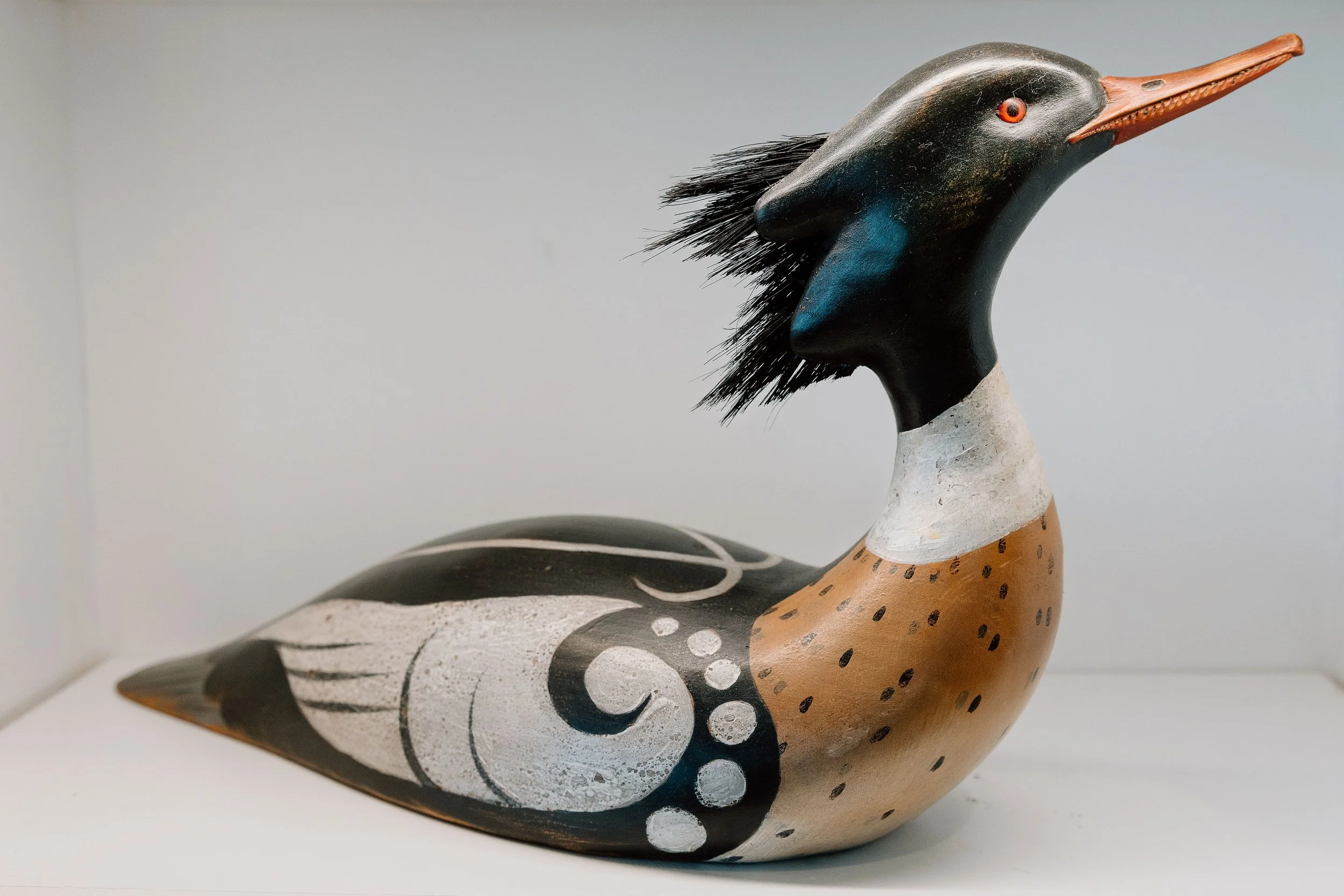
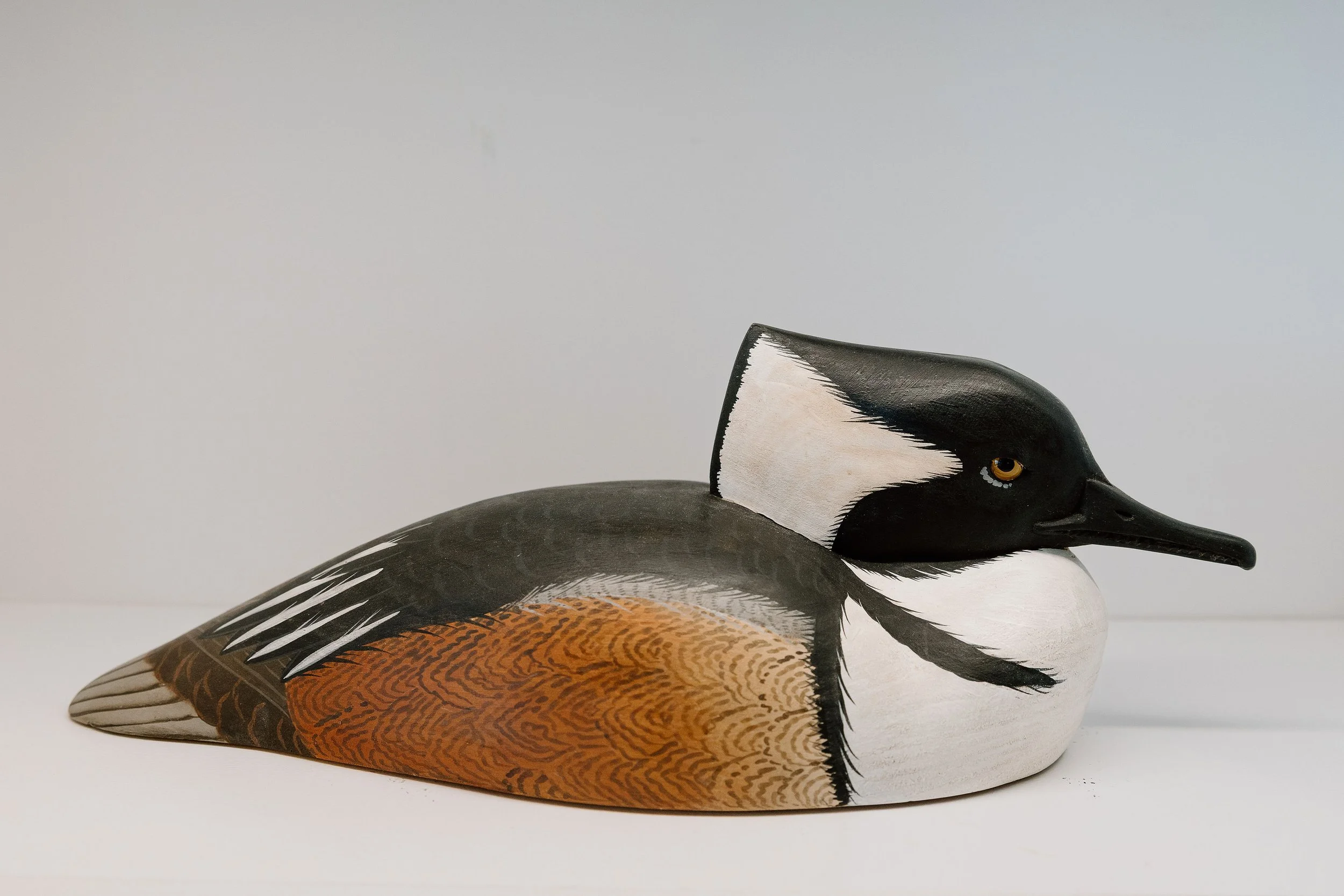
Extremely rare hooded merganser with extended crest. Hollow carved with inlet lead weight on underside. Mix of original paint and early in use repaint. Most of the bill is a professional replacement.v
Doug Jester (1876-1961), Chincoteague, VA. Jester used the same style on most of his decoys. All of his decoys are solid carved and unsanded.
Elkanah Cobb (1757–1837), Cobb Island, VA.
Hollow carved redhead with inlet neck seat, glass eyes, and relief wing tip carving. 'E.B. Cobb' branded on the underside. Original paint with minor flaking and wear.
The story of Cobb Island and its decoys is legendary. Their work has been included in every important decoy reference dating back to the groundbreaking writings of Joel Barber in 1934 and Eugene Connect in 1947.
Jesse Heisler (1891-1943), Burlington, NJ.
An all original Delaware River decoy with a hollow three-piece rounded body, tack eyes and a high head. The form closely follows the lead of pioneer John English of Florence, NJ, but has an upward curve to the carved primaries. Heisler was a top commercial maker of Delaware decoys and hunting boats, primarily marsh species but also bluebills, canvasbacks and a few geese. Pintails declined from the 1920s as the marches were dredged to facilitate navigation.
Nathan Cobb, Jr. (1825-1905), Cobb Island, Virginia. Rare hollow carved redhead. Inlet neck seat, carved eyes, and raised wingtips. Serif “N” carved in underside. Slight eye groove carving. Measures 14” long. Original paint with moderate wear; very early and thin wash to black areas; an old chip in bill was reset with tightly wrapped twine; tight drying cracks near tail and breast; very lightly hit by shot.
Arthur Cobb (1836-1890), Cobb Island, VA.
Hollow carved bluebill with raised, down sloping neck seat and carved eyes. Early in use repaint with moderate wear.
A. Elmer Crowell (1862-1952), East Harwich, MA.
Right: Early redhead hen. Pre brand model with slightly turned head and relief tail feather carving. “Q” branded on the underside for the Quandy collection. Original paint with minor to moderate wear.
Left: Redhead drake. Excellent redhead with slightly upturned head. Oval brand. Never rigged or weighted. Original paint with almost no wear.
Finest known “shooting stool” canvasback decoy pair by the Ward Brothers, Crisfield, MD. Dated 1966, signed and marked “shooting stool” on bottom of each. Made for and ex-collection of Dr. Kramer. Hot branded MK on bottom. Signed on bottom “Made by Steve, Painted by Lem.” All original paint and condition.
James T. Holly (1855-1935), Havre de Grace, MD.
Moderate gunning wear. Slight slope forward Where head is attached to body. Upswept tail.
Mason Decoy Factory (1896-1924)
James T. Holly (1855-1935), Havre de Grace, MD.
Branded “wigeon”. Slight slope forward where head is attached to the body. Upswept tail.
Keyes Chadwick (1865-1958), Oaks Bluff, Massachusetts. Excellent sigmate pair of mergansers with slightly turned heads. Measure 17.5” and 18.5” long. Original paint with fine crazing and minor wear; some scattered paint rubs and dents; slight separation at hen’s neck seat. Provenance: Ted and Judy Harmon collection.
Ira Hudson (1873 - 1949), Chincoteague, VA.
A very rare early special order by Hudson, used by some hunters for spring sport shooting since red breasted mergansers were hard to hit and hard to cook. The decoy is in all original paint, including the vivid red bill and tack eyes, a scarce color on Chincoteague which Ira obtained from the local fire department. The thin body, long paddle tail and carved teeth are a tour-de-force even for Hudson.
The beak was restored, leaving the line where the beak meets the head straighter than other Hudson decoys.
John “Daddy” Holly (1818-1892), Havre de Grace, MD. He was considered the Father of the Havre de Grace Carving school.
Peter Behringer & Susan Bastress
Peter and Susan live on the Eastern Shore of Maryland. Peter began collecting decoys in the 1970s after attending the Waterfowl Festival in Easton, MD and learning about the carvers, and through them the history of the Chesapeake Bay in the 19th and 20th centuries. Susan and Peter’s focus was initially on Chesapeake Bay carvers and has expanded to include carvers up and down the eastern seaboard.